Mariannette Miller-Meeks — 2026 Iowa candidate research
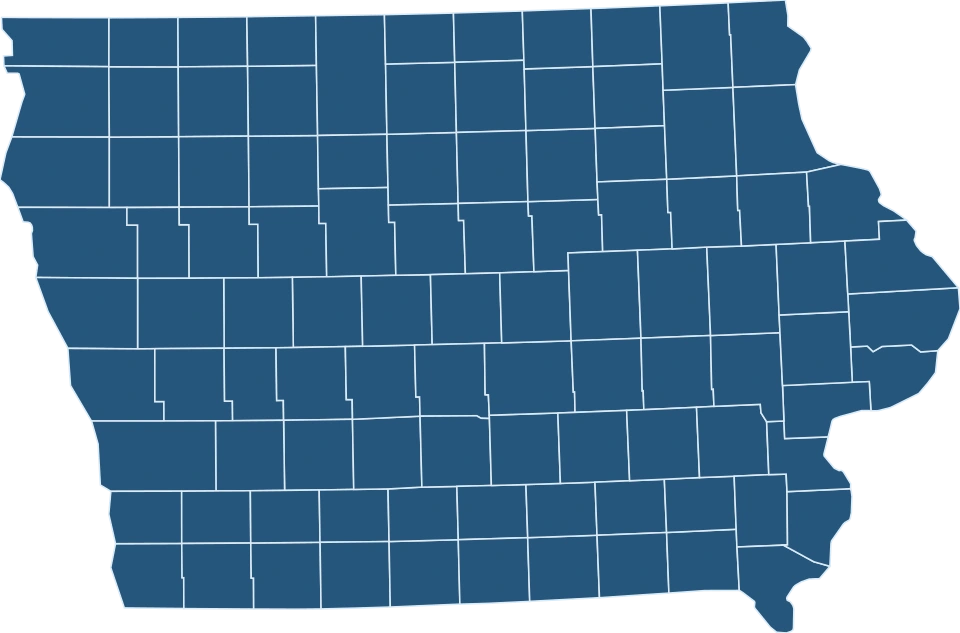
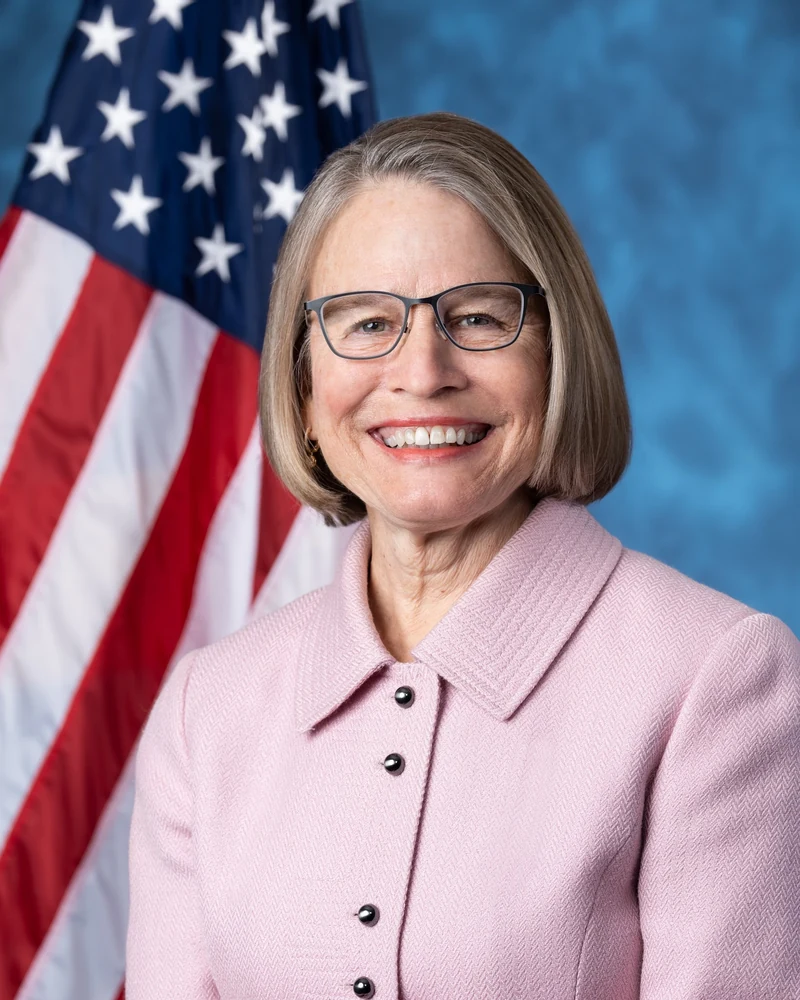
Physician, Army veteran and three-term U.S. representative from Iowa’s 1st Congressional District. She previously served as director of the Iowa Department of Public Health and has repeatedly faced Christina Bohannan in close general-election contests.
U.S. House of Representatives / House Creative Services
U.S. House District 1 / Mariannette Miller-Meeks record · manufacturing / economic development · September 28, 2026
Miller-Meeks joins $15 billion Iowa steel-project announcement; jobs, output and “largest” status remain prospective
What happened: On September 28, President Donald Trump announced that Mesabi Metallics plans a $15 billion steelmaking complex in Iowa. Rep. Mariannette Miller-Meeks attended the White House event because the proposed Lee County project is in Iowa's 1st Congressional District. Iowa Capital Dispatch reports that Miller-Meeks described the project as the largest steel mill in America and said the expected wages could let families earn more than $100,000.
What the project documents say: The White House says the project is expected to create 1,750 permanent jobs and up to 6,000 construction jobs, with an initial annual steelmaking target of 7.5 million tons and a later target of about 10 million tons. Mesabi Metallics separately describes a broader $18 billion Minnesota-and-Iowa investment and calls it the largest single investment in a steel complex in U.S. history. The company says the Iowa complex would use Minnesota iron ore and electric-arc-furnace technology.
Status and limits: The Iowa facility is a planned project, not an operating mill. The reviewed sources describe projected jobs, wages, output and economic impact rather than realized results. The phrase “largest steel mill in America” is therefore a prospective characterization; Mesabi's own release more specifically claims the largest single investment in a U.S. steel complex. Final site development, public incentives, hiring, production and economic effects remain subject to implementation and future evidence.
September 29 follow-up — state incentive terms still require legislative action: Gov. Kim Reynolds called the Iowa General Assembly into a special session for Friday, October 2, at 8:30 a.m. for the sole purpose of amending the Major Economic Growth Attraction (MEGA) program for the Mesabi project. The governor’s office says Iowa and Mesabi Metallics have executed a memorandum of understanding, but adjustments to the MEGA program are needed because of the project’s size. Iowa Capital Dispatch reports that specific amendments had not yet been publicly released on September 29. That means the state incentive framework was not final law at the time of this update, even though federal and state officials publicly described the project as moving forward.
October 2 special-session follow-up — proposal is now quantified, but not yet enacted at this review: Associated Press and Radio Iowa report that lawmakers convened Friday to consider raising the MEGA investment-tax-credit ceiling from 5% to 10% for the Mesabi project and extending the payout window from five years to 10 years. Reporting based on figures shared with lawmakers puts the potential state package at roughly $1.3 billion to $1.4 billion over a decade; the 10% investment-credit authority could reach as much as $1.5 billion if the full $15 billion investment qualified. Reynolds says credits would be conditioned on the company meeting investment and job commitments, and current MEGA rules include placement-in-service and job thresholds before credits are advanced. At the time of this review, the General Assembly was considering the changes; IA Fact Check does not record the proposal as enacted until legislative action is complete.
Deal-status context: Federal officials have publicly described the project as a major completed announcement, but AP notes that state and local steps still show unresolved commitments, including the incentive legislation and final site arrangements. The reported Lee County location, projected 1,750 permanent jobs, 6,000 construction jobs and production targets therefore remain planned outcomes rather than completed results.
Verification boundary: The special-session call and MOU materially advance the project record, but they do not convert projected jobs, wages, production, “largest” claims or taxpayer-return claims into realized outcomes. IA Fact Check will separate the enacted incentive terms, if approved, from the project’s longer-term construction and employment results.
Record note: This item documents a current Iowa economic-development announcement and Miller-Meeks's attributed description. It does not treat projected employment, wages, production, economic output or “largest” status as already achieved and assigns no candidate score.
U.S. House District 1 / Mariannette Miller-Meeks record · courts / media / 2024 Iowa Poll · September 23, 2026
Iowa judge dismisses Trump/Miller-Meeks lawsuit over 2024 Des Moines Register/Selzer poll
What happened: On September 23, Iowa District Judge Scott J. Beattie dismissed with prejudice a Polk County lawsuit brought by President Donald Trump, U.S. Rep. Mariannette Miller-Meeks and former state Sen. Bradley Zaun against pollster J. Ann Selzer, Selzer & Company, the Des Moines Register and its parent company Gannett. The lawsuit challenged publication of the final 2024 Iowa Poll, which had shown Kamala Harris ahead of Trump shortly before an election Trump ultimately won in Iowa by more than 13 percentage points.
Claims and ruling: The plaintiffs pleaded three causes of action: a claim under the Iowa Consumer Fraud Act, fraudulent misrepresentation and negligent misrepresentation. Beattie concluded the poll and reporting were protected political speech and that the pleaded claims also failed under Iowa law. The court rejected the requested injunction against future allegedly deceptive polling, assessed costs to the plaintiffs and denied Selzer's separate request for sanctions/show-cause proceedings.
Important procedural limit: A motion-to-dismiss ruling tests whether the pleaded allegations state legally viable claims. For that analysis, the court expressly assumed the plaintiffs' allegations that the poll was intentionally skewed and its results fabricated; it then held that all three counts still failed. That procedural assumption is not a factual finding that the poll was fabricated, and the dismissal likewise does not establish that the poll was accurate. IA Fact Check records the legal disposition and the court's stated reasoning without resolving disputed intent or methodology beyond the ruling.
Record note: This item documents Miller-Meeks' role as a plaintiff and the court's disposition. It does not treat advocacy by either side as an independently established fact and does not assign a candidate score.
U.S. House District 1 / Mariannette Miller-Meeks record · manufacturing / Congress · September 23, 2026
Miller-Meeks/Ernst critical-infrastructure manufacturing bill clears Congress and heads to president
What happened: On September 23, Rep. Mariannette Miller-Meeks and Sen. Joni Ernst announced that the Senate passed the bipartisan Critical Infrastructure Manufacturing Feasibility Act after the House had previously passed H.R. 1721. Ernst's office says the Senate passage was unanimous and the measure now heads to the president.
What the bill would require: The congressional releases say the bill would direct the U.S. Commerce Department to identify high-demand critical-infrastructure products that are currently imported because of manufacturing, material or supply-chain constraints; assess costs, benefits, jobs and feasibility of domestic production; and examine rural communities and industrial parks as potential manufacturing locations. Miller-Meeks' office says the study covers all 16 federally designated critical-infrastructure sectors and reports to Congress within 18 months of enactment.
Status and limits: Congressional passage is not the same as enactment. At the time of this update, the reviewed September 23 releases describe the bill as headed to the president for signature. IA Fact Check therefore records passage and the bill's study requirements without treating the proposed manufacturing expansion, job creation, supply-chain effects or any presidential action as already achieved.
Record note: These are primary congressional-office sources documenting legislative status and the sponsors' description of the bill. Policy effects remain prospective unless and until enacted and implemented.
U.S. House District 1 · fuel-cost policy · September 22, 2026
Miller-Meeks and Nunn back temporary limits on U.S. diesel exports as fuel prices rise
Reported positions: Radio Iowa reported September 22 that Rep. Mariannette Miller-Meeks and Rep. Zach Nunn both called for prioritizing domestic diesel supply as Iowa fuel costs rose. Miller-Meeks said the federal and state gas taxes should be suspended immediately and that American diesel should be sold to Americans first; she also called for longer-term steps including expanded domestic drilling, year-round E15 and ending the Iran war. Nunn said American energy should be sold to Americans first, criticized alleged price gouging by large oil companies and continued to support federal biofuel investment. KCCI separately reported that Iowa federal lawmakers differed over whether ending the Iran war should be part of the fuel-price response.
Scope and limits: These are attributed policy positions, not enacted measures. The reviewed reports do not supply final legislative text, a duration or legal mechanism for any diesel-export restriction, a complete tax-suspension funding mechanism, or a quantified causal estimate of how much any proposal would change retail fuel prices. IA Fact Check does not infer those missing details or assign a candidate score.
Record note: This item documents current policy positions and source context without endorsement, ranking, election prediction or claimed price effect.
U.S. House District 1 · campaign-ad evidence audit · September 18, 2026
Bohannan “Sweetheart Deal” ad: business-PAC total and lodging reimbursements are documented; influence, concealment and special-deal claims require separate evidence
What the ad says: Christina Bohannan’s September 18 “Sweetheart Deal” ad says Rep. Mariannette Miller-Meeks took more than $4 million in corporate PAC money and “does their bidding.” It also says Miller-Meeks used taxpayer dollars for a “sweetheart deal” on a rental home owned by a pharma lobbyist and then tried to hide it.
Campaign-finance record: KCRG reported that OpenSecrets data show about $4.025 million from business-related PACs to Miller-Meeks since 2019. KCRG also reported about $112,500 in corporate money to Bohannan over the past five years. The contribution total documents financial support from business PACs; by itself it does not establish that a donor directed a vote or that Miller-Meeks acted on a donor’s instructions.
Washington lodging reimbursement: KCRG reported that Miller-Meeks reimbursed herself more than $28,000 for Washington lodging from January 2023 through December 2025 using her Members’ Representational Allowance. The House Administration Committee’s current handbook permits reimbursement of ordinary and necessary lodging in Washington for members on official business, subject to its limits and documentation rules. Thus, use of MRA funds for eligible Washington lodging is not by itself evidence of an improper payment.
Rental ownership and lobbying connection: KCRG reported that the apartment was owned by lobbyists Carl Thorsen and Alec French and that Thorsen has lobbied for the Pharmaceutical Research and Manufacturers of America. Miller-Meeks’s team told KCRG that a retiring member referred her to the apartment, she discussed only the lease with Thorsen, did not know about the owners’ lobbying activity, and paid fair market value. KCRG found the studio listed at $1,500 per month, comparable with other units in the area. That reporting supports the existence of the rental relationship and lobbying connection, but the reviewed evidence does not independently establish a below-market “sweetheart” arrangement, quid pro quo, or concealment effort.
Scope and limits: This audit separates checkable dollar amounts, the ownership/lobbying relationship and House reimbursement rules from the ad’s causal and intent-based language. “Does their bidding,” “sweetheart deal” and “tried to hide it” are allegations or political characterizations unless supported by additional evidence showing control, preferential terms or concealment. No such additional evidence is established by the sources reviewed here.
Record note: This is a source-and-scope audit of campaign claims. It assigns no candidate score, ranking, endorsement or election forecast.
U.S. House · H.R. 5334 · Russia/Iran sanctions · September 16, 2026
All four Iowa House members vote Yea as House concurs in Senate amendments to H.R. 5334, 262–159
Official vote: The U.S. House Clerk records Roll Call 308 on September 16 as a 262–159 vote to concur in the Senate amendments to H.R. 5334, the Lindsey O. Graham Sanctioning Russia and Iran Act of 2026. Party totals were 203 Republican Yeas and seven Republican Nays; 58 Democratic Yeas and 152 Democratic Nays; and one Independent Yea, with 12 members not voting.
Iowa votes: The Clerk records Ashley Hinson, Zach Nunn, Mariannette Miller-Meeks and Randy Feenstra all voting Yea.
What the measure does: The Senate-amended package establishes and expands sanctions aimed at Russian officials, financial institutions, energy shipping and sanctions evasion, includes secondary-tariff authority tied to purchases of Russian energy, and extends Iran-related sanctions. The Senate had passed the amended bill 86–11 on August 7. After the House concurrence vote, the measure goes to the President.
Context and limits: This roll call records each member's position on this specific sanctions and tariff package. It does not establish why a member voted that way, does not predict presidential action, and does not by itself establish the measure's eventual economic, diplomatic or security effects.
KCRG and KWQC schedule Oct. 20 IA-01 debate at St. Ambrose University
KCRG and KWQC announced a live, one-hour First Congressional District debate between Mariannette Miller-Meeks and Christina Bohannan for October 20 at 7 p.m. at St. Ambrose University. The stations say the debate will air on KCRG 9.2 and COZI 6.3 and stream free on KCRG and KWQC platforms. KWQC’s Matt Christensen and KCRG’s Jim Mertens are scheduled to moderate. This is event-schedule information, not an election forecast or endorsement.
The Des Moines Register reported that Miller-Meeks supports national AI guardrails and cited federal proposals including the FRONTIER Act and her SPY Kids Act. She also pointed to the Ratepayer Protection Act in discussing data-center electricity and grid costs and said workforce training should address job changes associated with AI.
Record note: These are attributed campaign-policy positions and descriptions of pending proposals, not enacted policy or a candidate evaluation.
Public record and background
Serving a third term in the U.S. House.
Physician and longtime Army veteran.
Former director of the Iowa Department of Public Health.
Won the 2026 Republican nomination for another term.
Campaign ads, attacks and response media reviewed
U.S. House · Iran War Powers vote · September 15, 2026 · follow-up September 17
Nunn and Miller-Meeks switch to Yea on H. Con. Res. 93; both say continued Iran combat needs clearer limits or authorization
Official vote: The U.S. House Clerk records Roll Call 307 on September 15 as a 220–204 vote agreeing to H. Con. Res. 93, which directs the President under section 5(c) of the War Powers Resolution to remove U.S. Armed Forces from hostilities with Iran unless otherwise authorized. Zach Nunn and Mariannette Miller-Meeks voted Yea; Ashley Hinson and Randy Feenstra voted Nay.
What changed: Associated Press and Iowa Public Radio reported that Nunn and Miller-Meeks had voted against two earlier similar Iran War Powers resolutions but voted for H. Con. Res. 93. That is a documented change on this specific removal-resolution question, not evidence that either member changed every aspect of their Iran policy.
Nunn explanation: Nunn said that with the negotiating window closed, sustained combat operations require congressional authorization. He also said he would not support another open-ended war and framed the vote around constitutional oversight, while continuing to say Iran should be held accountable.
Miller-Meeks explanation: Miller-Meeks said the mission had to remain focused and limited, that she would not support keeping U.S. troops in an open-ended war, and that the President should present Congress and the public with a plan for how the conflict ends. She also cited Iowans' fuel costs.
Context and limits: AP reported that fuel prices and war casualties are part of the political context surrounding the vote. Those conditions do not establish why every member voted as they did; the explanations above are attributed to Nunn and Miller-Meeks themselves. The Yea vote directs removal from hostilities absent authorization but does not by itself bar every defensive action involving Iran.
J Street Action Fund names Miller-Meeks among five targets in a $3 million campaign
What is documented: J Street Action Fund announced that its Super PAC will spend $3 million across five 2026 Senate and House races opposing AIPAC-backed Republican candidates, including Rep. Mariannette Miller-Meeks in Iowa’s 1st District. Axios independently reported the same five-race campaign.
Important dollar-context: The reviewed announcement does not say all $3 million will be spent in IA-01 and does not provide an Iowa-specific allocation. IA Fact Check therefore records Miller-Meeks as one of five named targets rather than describing this as a $3 million Iowa buy.
Advocacy boundary: J Street’s release also criticizes Miller-Meeks over votes connected to the Iran war. Those are the Super PAC’s political characterizations; individual roll calls should be checked separately. The announcement establishes planned outside spending, not coordination with Christina Bohannan and not proof that AIPAC controls Miller-Meeks.
Mariannette Miller-Meeks joins cattle-market letter urging Trump to avoid destabilizing intervention
Iowa’s congressional delegation joined a multi-member letter to President Trump saying cattle producers face major headwinds and warning that market intervention can “pick winners and losers” and undermine long-term producer stability. The letter urges expanded overseas markets, domestic demand and consultation with cattle producers.
Miller-Meeks is listed among the Iowa House members who signed the Sept. 3 letter. The reviewed report did not quote a separate Miller-Meeks statement about the letter, so IA Fact Check does not attribute additional wording to her.
IA Fact Check context: Signing the letter and the quoted positions are documented. The letter’s predictions about the economic effects of imports or other market intervention are policy/economic arguments and are not treated here as proven outcomes.
Federal follow-up, Sept. 4: President Trump signed orders aimed at helping cattle ranchers protect herds from gray wolves, expand local meat processing and move toward country-of-origin labeling. Reuters reported that mandatory country-of-origin labeling would still require congressional action. The new actions add domestic-producer support, but they do not simply rescind the administration’s separate Aug. 26 decision to expand the 2026 lower-tariff quota for lean beef trimmings by 300,000 metric tons—the import policy Iowa lawmakers criticized. IA Fact Check therefore records the Sept. 4 response as policy context rather than treating it as proof that the delegation’s economic predictions were correct.
Miller-Meeks signs ACS CAN Cancer Promise and reiterates research, screening and rural-access priorities
Iowa Capital Dispatch reported that Rep. Mariannette Miller-Meeks signed the American Cancer Society Cancer Action Network’s nonpartisan Cancer Promise at an Aug. 31 Iowa City event with cancer survivors and researchers. The pledge supports robust cancer-research and prevention investment, affordable comprehensive care, and access to prevention and early-detection services.
Primary-record context: ACS CAN’s current signer roster lists Miller-Meeks among the Iowa federal candidates who signed the pledge and explicitly states that the program is not an endorsement. Miller-Meeks also pointed to enacted legislation she championed establishing Medicare coverage for FDA-approved multi-cancer early-detection screening tests beginning in 2028, and to House passage of her bipartisan EARLY Act reauthorization for breast-cancer education and screening programs.
IA Fact Check context: this entry documents a current candidate policy commitment and related legislative record. Signing the pledge establishes the position she publicly committed to; it does not by itself establish future appropriations, implementation levels or health outcomes. Claims that a screening technology will transform access or produce particular outcomes should be assessed separately as evidence matures.
Miller-Meeks promotes 2025 tax law at Iowa manufacturing event; Bohannan disputes its broader effects
Iowa Capital Dispatch reported Aug. 28 on Rep. Mariannette Miller-Meeks' argument that provisions of the 2025 federal tax-and-spending law are helping Iowa manufacturers and workers. The report also preserves Democratic challenger Christina Bohannan's opposing argument about the law's broader health-care and household effects.
IA Fact Check context: this is current campaign-policy context, not a verdict on the law as a whole. Claims about particular tax provisions, business investment, household savings, health-care effects or job changes should be evaluated against the relevant statutory text and independent economic/administrative data rather than treated as established merely because a candidate states them.
AP’s new field report examines Christina Bohannan’s third race against Mariannette Miller-Meeks after the 2024 contest ended by 799 votes. It documents Bohannan’s expanded rural outreach, prior gains in Johnson and Scott counties, and Miller-Meeks’ defense of her health-care record and support for the 2025 tax-and-spending law.
IA Fact Check assessment: Independent race context — not a poll, Hogwash verdict or election prediction.
The article also records current district pressures involving tariffs and farm trade, fuel costs and rural health care, including MercyOne Clinton Medical Center’s planned end of obstetrics/labor-and-delivery services. Candidate strategy and political-wave analysis are preserved as context rather than converted into factual verdicts.
Iowa Secretary of State live State Fair straw-poll snapshot
Source: Iowa Secretary of State · Snapshot: August 22, 2026
Current U.S. House — District 1 tally: Mariannette Miller-Meeks (R) 291 — 66.14%; Christina Bohannan (D) 131 — 29.77%; Michael Bridgford (NP) 18 — 4.09%.
How to read it: This is an official tally from the Secretary of State’s State Fair participation exercise, but it is unscientific and unofficial. Fairgoers self-select into the poll; it is not a representative sample of Iowa voters, has no reported margin of error and should not be used as a forecast or substitute for scientific polling. Totals can change while the fair remains open.
Sponsor: American Cancer Society Cancer Action Network / candidate pledge · Date: Current roster checked August 18, 2026
ACS CAN’s current federal Cancer Promise roster lists Mariannette Miller-Meeks as an Iowa signer. The pledge covers robust cancer research and prevention investment, access to affordable comprehensive health care, and access to cancer prevention and early-detection services including tobacco prevention and cessation.
IA Fact Check assessment: Documented signer status — policy commitment, not an ACS CAN endorsement
ACS CAN explicitly says its Cancer Votes program is nonpartisan and does not endorse or oppose candidates. IA Fact Check therefore treats this as a documented candidate policy commitment, not as evidence that ACS CAN endorses Mariannette Miller-Meeks, not as proof of a particular policy outcome, and not as evidence that candidates absent from the current signer roster oppose the pledge.
Embedability: The primary source is a public pledge/signature roster rather than a standalone video or audio creative, so the official ACS CAN record is linked directly.
Sponsor: Christina Bohannan for Congress · Date: 2026
Bohannan’s campaign links Miller-Meeks to drug and insurance interests, an insulin-price vote, Medicare drug policy and a Washington rental arrangement involving a lobbyist.
IA Fact Check assessment: Mixed — several literal votes/contributions are checkable; “bought and paid for” is political interpretation
The underlying votes, campaign contributions and housing reimbursement should be evaluated separately. A contribution occurring near a vote can establish timing, not a quid pro quo by itself. “Bought and paid for” and “corruption” are conclusions that require evidence beyond contribution timing.
2026 Q2 FEC campaign-finance snapshot
Source: Federal Election Commission / Iowa Capital Dispatch · Coverage: through June 30, 2026
Federal Election Commission data through June 30, 2026 show Mariannette Miller-Meeks with $7.21 million in total receipts, $2.89 million in total disbursements and $4.69 million cash on hand. Iowa Capital Dispatch summarized the latest quarterly period as about $1.02 million raised and $519,700 spent.
IA Fact Check assessment: Supported public record — not a misconduct finding
FEC totals document the campaign’s reported financial position. They do not by themselves prove donor influence, corruption, candidate popularity or likely election outcome.
This profile separates documented actions and quotations from campaign interpretation. Where an opponent uses a political label, the label is presented as advocacy rather than converted into a factual finding unless the underlying evidence supports the narrower claim.