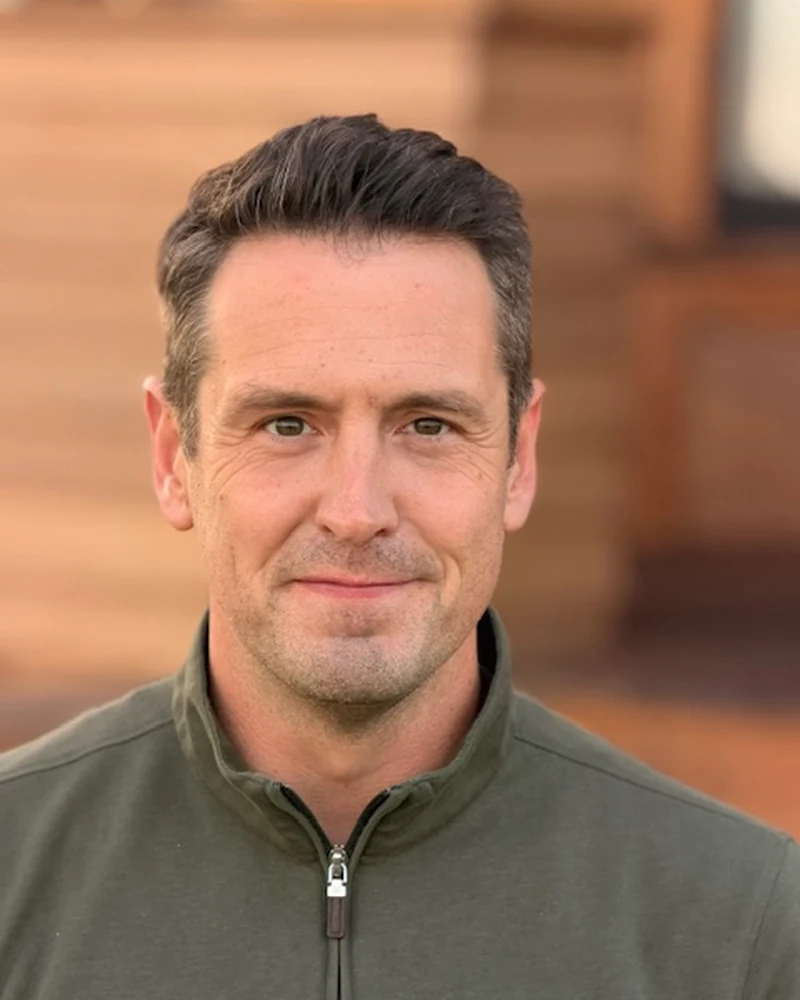
Republican nominee for Iowa governor in 2026, businessman and farmer with a family farm near Belle Plaine. Lahn campaigns on an “Iowa First” platform focused on family farms, limits on concentrated or out-of-state land ownership, water and health concerns, education, and opposition to large corporate influence.
Governor race · public polling · September 24–28, 2026
Fox News likely-voter poll: Sand 53%, Lahn 44%
What the poll reports: Fox News reports Democrat Rob Sand at 53% and Republican Zach Lahn at 44% among Iowa likely voters. Among all registered voters in the survey, Sand is at 53% and Lahn at 43%.
Methodology: The bipartisan Fox News polling team — Beacon Research (D) and Shaw & Company Research (R) — interviewed 1,204 Iowa registered voters Sept. 24–28, including a 1,008-person likely-voter subsample. Interviews used live telephone calls to landlines and cellphones plus online responses after text invitations. Fox reports a ±2.5-point margin of sampling error for registered voters and ±3.0 points for likely voters.
How to read it: The nine-point Sand–Lahn difference is larger than the pollster-reported ±3.0-point likely-voter margin of error, but a margin of error is not a probability that the election will finish within that range. The survey remains one snapshot subject to turnout-model, nonresponse and other nonsampling uncertainty, so IA Fact Check records it without forecasting the election.
Governor race · cancer screening policy · September 25, 2026
Lahn proposes state-negotiated Galleri pricing for some Iowans; FDA review remains pending after advisory-panel vote
Candidate proposal: KCCI reported September 25 that Republican governor candidate Zach Lahn wants Iowa to negotiate a lower price with GRAIL for its Galleri multi-cancer blood test, with the goal of making the test more accessible to "vulnerable Iowans." Lahn suggested a state-negotiated price could potentially support recurring access for some Iowans, but KCCI reported that he did not specify eligibility rules or how much the proposal could cost the state.
Regulatory context: KCCI reported that Galleri is not currently FDA-approved. The FDA says GRAIL's premarket approval application is for a prescription-only blood test intended for multi-cancer screening in adults age 50 or older and that any advisory-committee recommendation is non-binding. Associated Press reporting carried by KCCI says the September 23 FDA advisory panel voted 7-2, with one abstention, that the test's potential benefits outweigh its risks while also raising questions about how well the technology works. A positive advisory vote is not final FDA approval.
IA Fact Check limits: The reviewed sources establish Lahn's stated pricing/access proposal and the current federal review status. They do not establish a final Iowa eligibility design, appropriation, negotiated price, annual state cost, insurance requirement, or FDA approval. Galleri looks for cancer-associated signals and a positive result requires additional diagnostic workup; this record does not characterize it as a stand-alone cancer diagnosis or a replacement for established screening.
Governor race · school immunization policy · September 25, 2026
Lahn says he supports ending Iowa school vaccine requirements; current law requires immunization records or a valid exemption
Candidate position: KCCI reported September 25 that Republican governor candidate Zach Lahn said he supports eliminating Iowa's vaccine requirements for children to attend school. KCCI described the idea as a proposal state lawmakers considered earlier in 2026 but did not pass. IA Fact Check records this as Lahn's stated campaign position, not as enacted policy.
Current Iowa rule: Iowa Health and Human Services says Iowa Code chapter 139A.8(6) and Iowa Administrative Code 641-7.7 govern immunization requirements for students attending licensed child-care centers and elementary or secondary schools. Students must provide the required immunization documentation, a valid exemption certificate, or a provisional certificate. Iowa HHS separately states that K-12 enrollment requires two doses of measles- and rubella-containing vaccine, while current law provides religious and medical exemptions.
IA Fact Check limits: The reviewed sources establish Lahn's support for ending school-attendance vaccine requirements and the current Iowa requirements/exemptions. They do not supply final legislative text for a Lahn administration, establish which specific vaccine rules would ultimately change, or show that the proposal has become law.
Governor race · public polling · September 17–20, 2026
Marist registered-voter poll: Sand 54%, Lahn 42%
What the poll reports: Marist reports Democrat Rob Sand at 54% and Republican Zach Lahn at 42% among Iowa registered voters in its September survey.
Methodology: Marist says it interviewed 1,050 Iowa registered voters Sept. 17–20 using a multi-mode design with live-interviewer phone calls, text and online contacts. The reported margin of error for registered voters is ±4.4 percentage points.
How to read it: This is one survey snapshot, not an election result or forecast. The sample is registered voters rather than a likely-voter screen, and differences from other public polls can reflect field dates, sampling, weighting, mode and turnout assumptions. IA Fact Check records the result alongside other public polling without ranking the candidates or predicting the election.
Lahn outlines income-tax account for some young or returning Iowans to use toward a first-home down payment; duration, cost and final eligibility remain unspecified
What was proposed: KCCI reported September 21 that Republican governor candidate Zach Lahn said an Iowan who graduates from an Iowa high school, enters the workforce and signs up for the program could receive what he described as a “complete exemption from income tax.” Lahn said the amount that otherwise would have been paid in state income tax would go into an account that could later be used for a down payment on a first home in Iowa.
Who might qualify: Lahn told KCCI he would also like the program to cover people who graduated from an Iowa high school, moved away and later returned. He said it could be targeted toward fields where Iowa needs workers, citing trades, nursing and mental health. Those examples were presented as possible targeting criteria rather than a final statutory eligibility list.
Details still open: KCCI reported that Lahn did not specify how long participants could receive the exemption, how much the proposal would cost the state or exactly which workers would qualify. The proposal is therefore a campaign-policy concept with newly stated mechanics, not an enacted tax program or a complete legislative text.
Budget context: KCCI reported that Iowa lawmakers approved about $9.65 billion in General Fund spending for the current budget year while the state expects about $8.4 billion in General Fund revenue, with prior balances and a Taxpayer Relief Fund transfer helping cover the difference. That context identifies a fiscal question the proposal would have to address; it does not by itself establish the program’s eventual cost because Lahn has not published the missing eligibility and duration details.
IA Fact Check scope: This entry records the mechanics Lahn described and the details he had not yet specified. It does not score the proposal, estimate its fiscal impact without a complete design, endorse or oppose the candidate, or predict an election outcome.
Governor race · campaign finance · September 21, 2026
MAHA Action PAC says it donated $1 million to Lahn; Iowa has no state contribution cap, but disclosure rules still apply
What was announced: In a September 21 press release distributed through PR Newswire, MAHA Action PAC said it donated $1 million to Zach Lahn’s campaign for governor. The release is the PAC’s own announcement and labels MAHA Action PAC a federal political action committee. IA Fact Check records the amount as the PAC’s stated contribution; this pass did not independently verify the transaction in an Iowa Ethics and Campaign Disclosure Board filing.
What Iowa rules say: The Iowa Ethics and Campaign Disclosure Board says Iowa does not impose campaign contribution limits and state or local candidates may receive unlimited funds from individuals and PACs if the contributions are properly disclosed and the contributor is not prohibited. The Board says reports must identify the date received and the contributor’s name and mailing address for itemized contributions.
Federal/out-of-state PAC filing context: The Board says an out-of-state or federal PAC making a contribution of $50 or more to an Iowa committee must file a Verified Statement of Registration with the Board within 15 days. Because MAHA Action PAC describes itself as a federal PAC, that rule is relevant to the announced contribution. This entry does not determine whether the required filing has already been made or is still within the applicable filing window.
What this does not establish: The size of the announced contribution, by itself, does not show that Iowa’s contribution-limit rules were violated because Iowa does not impose a dollar cap on PAC contributions to state candidates. It also does not establish coordination, a quid pro quo, improper use of funds or a reporting violation. Those questions would require additional evidence and, where applicable, campaign-finance filings or enforcement records.
Source note: The $1 million amount comes from the PAC’s own press release rather than independent reporting or an official filing located during this review. The Iowa campaign-finance rules cited below are primary guidance from the state Ethics Board.
Record note: This entry documents a campaign-finance announcement and the governing disclosure framework. It assigns no candidate score, ranking, endorsement or election forecast.
Governor race · antitrust authority context · September 21, 2026
Lahn says Iowa antitrust law can be used against Big Ag monopolies; statute gives enforcement authority to the attorney general and remedies to courts
What was reported: The New Yorker reported September 21 that Republican governor nominee Zach Lahn says he aims to “break up the Big Ag monopolies” and says Iowa antitrust laws can be used to do it. The article says Lahn has accused dominant seed and fertilizer companies of harming farmers through concentrated market power.
What Iowa law says: Iowa Code chapter 553, the Iowa Competition Law, prohibits attempts to establish, maintain or use a monopoly in a relevant market for the purpose of excluding competition or controlling prices. Section 553.7 says the Iowa attorney general shall institute state criminal and civil actions under the chapter. Section 553.9 gives the attorney general investigative powers when there is reasonable cause to believe prohibited conduct occurred.
What “break up” can mean under the statute: Section 553.12 allows the state or an injured person to sue for remedies that can include injunctions, divestiture, divorcement, dissolution of a domestic enterprise’s right to do business in Iowa and other equitable relief. Those remedies are obtained through litigation and court action. The statute does not give the governor unilateral authority to order a company broken up.
Recent enforcement example: In March 2026 the Iowa Attorney General’s Office announced a settlement in the multistate antitrust case against Live Nation/Ticketmaster after Iowa joined the Justice Department-led litigation. That example shows Iowa can participate in antitrust cases seeking structural or competition remedies, but it does not establish that any particular agricultural company has violated chapter 553.
IA Fact Check scope: Lahn is correct that Iowa has a state antitrust statute with potentially structural remedies. The legal mechanism matters: state enforcement is assigned to the attorney general and remedies such as divestiture are pursued in court. Whether a specific agricultural company is a monopoly, violated the statute or could be subject to divestiture would require evidence and legal proceedings not established by the campaign statement.
Record note: This entry documents a campaign legal-authority claim and the statutory process. It assigns no candidate score, ranking, endorsement or election forecast.
Lahn and Sand target out-of-state/institutional farmland ownership; ISU data distinguish residency from ownership structure
What the candidates propose: Iowa Capital Dispatch reports that Republican nominee Zach Lahn is calling for “human-level disclosure” of farmland ownership and has proposed lower property-tax rates for Iowans and higher rates for institutional investors. Democratic nominee Rob Sand’s published plan proposes higher taxes on out-of-state landowners and a restriction on hedge funds and LLCs purchasing “too much” Iowa land.
What Iowa State data show: Iowa State University’s 2022 statistically representative farmland survey reports that 75% of Iowa farmland was owned by full-time Iowa residents, 5% by part-time Iowa residents and 20% by nonresidents. The same survey reports 23% of farmland in trusts, 9% in LLCs and 6% in corporations. Those categories measure different things: an LLC, trust or corporation is an ownership structure and does not by itself establish that the owner is an out-of-state institutional investor.
Research context: Iowa Capital Dispatch interviewed Iowa State agricultural-law/economics researchers who said the rise in LLC and trust ownership is often connected to family succession, liability protection and property management. The article also notes Iowa laws that restrict many corporate/LLC farmland holdings and quotes researchers saying many nonresident owners retain direct Iowa family or farming ties.
IA Fact Check scope: This update documents the candidates’ proposals and the underlying ownership/residency data. It does not predict the proposals’ effects, treat every nonresident owner as an institutional investor, or treat every LLC/trust as outsider ownership.
Governor race · altered-image fact check · September 20, 2026
AFP finds face-shield image of Rob Sand was AI-altered; Zach Lahn had amplified the image
What circulated: AFP reported September 18 that an image shared on social media and amplified by Republican gubernatorial nominee Zach Lahn appeared to show Democratic nominee Rob Sand seated at a table wearing a large mask and face shield. AFP traced the image to a clip from Lahn’s July appearance on the “Ruthless Podcast” and to a September 1 Facebook post by Lahn.
What AFP verified: AFP located the original Iowa Capital Dispatch photograph from July. In that original image, Sand is wearing neither a mask nor a face shield. AFP also reported that OpenAI’s image-verification tool detected a SynthID watermark in the altered version, indicating that the image had been manipulated using AI.
Context: AFP noted that authentic photographs of Sand wearing facial coverings do exist. The finding applies to this specific face-shield image; it does not establish that every image of Sand wearing a face covering is altered.
Campaign response: AFP said it contacted Lahn’s campaign for comment and had received no response by publication. IA Fact Check records Lahn’s amplification of the image and AFP’s verification findings without inferring who created the altered image or why it was created.
Governor policy proposal · fiscal context · September 19, 2026
Lahn adds a funding mechanism to his temporary fuel-tax proposal; available public sources do not yet verify the offset would fully cover the cost
New campaign detail: At a September 18 Sioux City campaign event, Republican governor nominee Zach Lahn said a temporary suspension of Iowa sales-tax breaks for data centers could be paired with a temporary fuel-tax suspension. KTIV quoted Lahn saying the fuel-tax cost was estimated at more than $200 million, depending on duration, and that suspending data-center tax breaks could “even out, or maybe even net a bit positive” so the state would replenish or avoid drawing down the Road Use Tax Fund.
Data-center exemption record: Iowa Department of Revenue guidance confirms that qualifying data centers can receive broad sales- and use-tax exemptions or refunds for eligible computers, equipment, electricity and other property, subject to investment and other requirements. The public DOR guidance reviewed for this update describes who qualifies and what purchases are eligible, but it does not provide a statewide annual dollar estimate showing how much a temporary suspension would raise during the same period as Lahn’s proposed fuel-tax reduction.
Road-fund context: DOR states that Iowa fuel-tax receipts are transferred to the constitutionally protected Road Use Tax Fund and must be spent on roads and bridges. A December 2025 Legislative Services Agency report shows fuel taxes produced about $671 million for the RUTF in FY2025, alongside vehicle-registration and other revenue streams. Those figures establish the scale and destination of fuel-tax revenue, but they do not by themselves verify the campaign’s specific “over $200 million” estimate or show that a data-center exemption suspension would fully replace the foregone receipts.
What remains unverified: The funding mechanism remains a campaign proposal, not enacted legislation. Its net fiscal effect depends on the duration and exact fuel-tax reduction, which data-center exemptions would be suspended, timing and taxable purchases, legal treatment of existing qualifying projects, and final legislation. IA Fact Check therefore records the proposed offset and the known tax structure while leaving the claimed full offset unverified pending a published fiscal analysis or bill text.
Record note: This entry documents and checks a campaign policy claim. It assigns no candidate score, ranking, endorsement or election forecast.
Governor · campaign-rally claim context · September 18, 2026
Vance’s Council Bluffs claims: farm-trade figures and prescription-drug decline checked against USDA and BLS data
What was said: At a September 18 Council Bluffs rally supporting Zach Lahn and other Iowa Republicans, Vice President JD Vance said U.S. corn exports were “up by 35%,” said China had committed to buying $17 billion in U.S. agricultural products “just this year,” and described roughly 2 billion consumers as newly open to American food. These are Vance’s claims; IA Fact Check does not attribute them to Lahn unless Lahn separately makes them.
Corn-export record: USDA Foreign Agricultural Service trade data list U.S. corn exports at $13.92 billion in calendar 2024 and $18.55 billion in calendar 2025. That is an increase of about 33.3% using USDA’s rounded values; Iowa Capital Dispatch, citing USDA data with a slightly different 2024 figure of $13.71 billion, described the increase as roughly 35%. The direction and approximate scale of the “35%” claim are supported when the metric is export value and the comparison is 2024 to 2025. The claim does not, by itself, specify value versus volume or establish that every part of the increase was caused by one administration policy.
China commitment: A May 2026 White House fact sheet says China committed to purchase at least $17 billion per year of U.S. agricultural products in 2026, 2027 and 2028, in addition to separate soybean commitments. That supports the existence of a $17 billion annual purchase commitment. A commitment is not the same thing as completed purchases; USDA lists total U.S. agricultural exports to China at $8.27 billion for calendar 2025, before the 2026 agreement.
“2 billion new consumers”: The reviewed rally report quotes the figure but does not identify the countries, calculation or baseline used to derive 2 billion newly accessible consumers. IA Fact Check therefore records it as an attributed campaign-rally claim rather than a independently verified count.
42% agricultural-trade-deficit claim: In the same farm-policy passage, Vance said the president had “cut that deficit by 42%.” USDA’s current Trade Wins tracker uses the same comparison: a $50 billion agricultural trade deficit when Trump took office in January 2025 and a current deficit forecast of $29 billion, labeled a 42% reduction. That supports the numerical basis of the claim as USDA’s forecast framing. The distinction matters because fiscal year 2026 is not complete: $29 billion is a forecast, not a final realized annual trade balance, and the tracker does not by itself isolate how much of the projected change is attributable to any one policy or actor.
Prescription-drug follow-up · September 19, 2026
What Vance said: Iowa Public Radio reported that Vice President JD Vance told the Council Bluffs rally that President Trump had pressed pharmaceutical executives over U.S. drug prices and said “that’s why” the country had seen the “fastest drop in prescription drugs in 60 years.” IA Fact Check separates the price trend from the causal attribution.
BLS price record: The Bureau of Labor Statistics prescription-drug CPI fell 3.1% over the 12 months ending in July 2026. Associated Press, citing the BLS series, reported that was the steepest annual decline since March 1963. The newer August BLS table shows prescription-drug prices still down 2.9% from a year earlier. On that national CPI measure, the claim that the recent decline was the steepest in roughly six decades is supported.
Causation and scope: The CPI data do not establish that pressure on pharmaceutical executives or any one policy caused the decline. Associated Press reported that experts pointed to multiple factors, including generic and biosimilar competition, Medicare-negotiated prices taking effect in 2026 under the 2022 Inflation Reduction Act, and manufacturer pricing changes; AP also reported that the direct effect of the administration’s most-favored-nation arrangements remained uncertain. BLS says its prescription-drug index measures prescriptions purchased at retail, mail-order or internet pharmacies using total reimbursement to the retailer; drugs primarily consumed and billed during hospital visits are captured in the hospital-services index instead. The numerical trend is therefore supported, while the “that’s why” attribution is not established by the CPI series alone.
Record note: This is a neutral source-and-scope audit of rally statements. It assigns no candidate score, ranking, endorsement, suitability/electability assessment or election forecast.
Governor · opponent-ad evidence audit · September 18, 2026
Sand “Only” ad links Lahn’s mRNA-ban position to cancer research; current record shows promising late-stage therapy, not an approved mRNA cancer treatment
What the ad says: Rob Sand’s September 18 campaign ad says Zach Lahn wants to “ban some lifesaving cancer treatments,” tying that statement to Lahn’s support for banning mRNA vaccines. The ad cites mRNA technology being studied as a cancer treatment and presents the issue as part of Iowa’s broader cancer-policy debate.
Documented policy position: Independent reporting supports the underlying policy contrast, but the scope needs care. The Washington Post reported in June that Lahn wanted to pull mRNA coronavirus shots from the market, and Axios reported in August that he had previously called for a ban on mRNA vaccines. Those reports document an mRNA-vaccine ban position. They do not, by themselves, provide enacted bill text or a detailed Lahn proposal defining whether an Iowa ban would reach every future mRNA-based oncology product, individualized neoantigen therapy, or non-vaccine mRNA medicine.
Cancer-research record: The cancer-research premise is real. Merck and Moderna said August 19 that their Phase 3 INTerpath-001 trial of intismeran autogene — an individualized mRNA-based neoantigen therapy used with Keytruda after melanoma surgery — met its recurrence-free-survival and distant-metastasis-free-survival endpoints. Earlier five-year Phase 2b follow-up reported a 49% reduction in the risk of recurrence or death and a 59% reduction in the risk of distant metastasis or death versus Keytruda alone. The companies also said they planned to engage regulators on filing submissions, so the mRNA component remained investigational rather than an already FDA-approved cancer treatment at the time of the announcement.
Scope and limits: The ad is therefore grounded in a genuine policy contrast and genuine late-stage mRNA cancer research, but “ban some lifesaving cancer treatments” goes further than the reviewed public record establishes. The record does not yet show an enacted Iowa ban or detailed proposal proving that a future cancer therapy such as intismeran would be prohibited, and the leading example cited here remained investigational. IA Fact Check does not assess whether such a ban should be adopted; it separates the documented policy position, the current clinical evidence and the unresolved legal scope.
Record note: This is a source-and-scope audit of a campaign claim. It assigns no candidate score, ranking, endorsement or election forecast.
Governor · campaign-ad evidence audit · September 18, 2026
New Lahn “13 Million” ad mixes documented family giving and an LGI-linked discharge order with broader claims the reviewed record does not establish
What the ad says: A September 16 Zach Lahn campaign ad says the owners of a company tied to Rob Sand’s in-laws gave Sand “$13 million — the most in Iowa history,” says the company makes “the nitrate fertilizer poisoning Iowa’s rivers,” says it was repeatedly cited for illegal dumping, and says it was caught polluting Iowa drinking water. The ad then asks what the donors expect in return. The Sand campaign disputes those characterizations.
Campaign-finance record: Campaign-finance records do document very large contributions from Sand’s wife and members of the Lauridsen family. Iowa First Check’s September 8 review of Iowa Ethics and Campaign Disclosure Board contributor histories totals $11,519,247 from Christine Sand and Lauridsen relatives beginning in 2024. That review deliberately uses a 2024-forward window. IECDB-derived Transparency USA pages also show older family contributions, including large 2018 contributions and additional 2021–22 contributions, so a broader historical window can move the family total closer to a rounded $13 million. The reviewed contributions are reported as individual donations, not a corporate contribution from Lauridsen Group itself. IA Fact Check has not independently reconstructed every historical family transaction, and the phrase “most in Iowa history” does not identify a clear comparison category such as one donor, one family, one company, one cycle or one campaign.
Environmental record: The environmental portion has a documented core but uses broader wording than the official record reviewed here. Iowa DNR’s February 12, 2026 enforcement summary names AMPC, LLC doing business as Essentia Protein Solutions and orders it to cease illegal discharges to waters of the state, comply with its wastewater and land-application permits, submit an engineering report and pay an $8,000 administrative penalty. DNR’s facility database identifies Lauridsen Group, Inc. as the owner of the Essentia Protein Solutions facility. Separately, Boyer Valley Company — another LGI business — says it processes poultry by-products including feather meal and poultry blood meal that are used as base ingredients in organic fertilizer production. Those sources establish an LGI ownership link, fertilizer-related products and a documented DNR discharge enforcement action. They do not, by themselves, establish that LGI makes “the nitrate fertilizer” responsible for Iowa’s statewide river or drinking-water problems, or that the cited Essentia discharge contaminated a public drinking-water supply.
Scope and limits: This audit does not infer motive or quid pro quo from lawful campaign contributions, does not conclude that every environmental allegation about an LGI affiliate is false, and does not treat a campaign’s response as independent evidence. Additional DNR orders, laboratory records or older campaign-finance filings could add context. The record therefore preserves the supported components — substantial family giving and an LGI-owned facility’s documented discharge order — while separating them from the ad’s broader historical-superlative, fertilizer and drinking-water assertions.
Record note: This is a source-and-scope audit of specific factual assertions. It assigns no candidate score, ranking, endorsement or election forecast.
Governor policy positions · September 16, 2026
Zach Lahn on affordability, Medicaid and education
KWQC reported that Lahn said Iowa should pursue additional property-tax relief. On Medicaid, he said the current system is largely working but proposed barring managed-care organizations from vertical integration with pharmacies/providers and using AI to identify fraud while not allowing AI to deny claims. On education, he defended education savings accounts, argued new spending should be targeted, and said Iowa’s education challenge involves quality and culture as well as funding.
Record note: These are attributed campaign-policy positions. This entry does not score, rank, endorse or forecast either candidate.
Governor · campaign tax claim · September 17, 2026
Lahn ad says Sand wants to raise Iowans’ taxes by $7,500 a year; reviewed figures do not establish that amount
The claim: PolitiFact Iowa reported September 17 that an August 21 Zach Lahn campaign ad said Rob Sand “wants to raise your taxes by $7,500 per year.” The ad cited Sand’s criticism of Iowa’s 2024 income-tax cuts and the federal One Big Beautiful Bill Act. PolitiFact reported that Sand’s campaign said he does not support repealing or reversing Iowa’s recently enacted individual income-tax cuts, and that Lahn’s campaign did not provide PolitiFact a calculation for the $7,500 figure.
What the record shows: Iowa Department of Revenue says Senate File 2442 established a 3.8% flat individual income-tax rate beginning in tax year 2025. A Common Sense Institute Iowa study, summarized by Gov. Kim Reynolds’ office when it was released, estimated the 2024 law would reduce 2025 income taxes by about $410 for a typical Iowa household earning $75,000. Tax Foundation’s 2026 federal estimate lists an average Iowa tax reduction of about $3,130 per filer under the federal law. Those figures are different measures and should not simply be added as a universal household figure, but neither source supports an across-the-board $7,500 annual Iowa tax increase attributable to a governor.
Scope and context: Sand has supported some targeted tax increases, including tobacco taxes, and has supported funding the voter-approved IWILL trust through a sales-tax increase. Those positions are distinct from a proposal to reverse the 3.8% state income-tax law. A governor also could not unilaterally repeal federal tax law. IA Fact Check therefore records the $7,500 statement as a campaign claim whose cited public evidence does not establish that amount, while preserving Sand’s separately documented tax positions.
Record note: This entry documents the claim and underlying tax record; it does not assign a candidate score, endorsement or election forecast.
Technology policy · September 16, 2026
Zach Lahn on AI oversight
The Des Moines Register reported that Lahn said the speed of AI development is a concern and that there is a role for state government in oversight. He said he had not settled on a specific policy proposal and would be willing to discuss regulation with the Legislature. He cited automated license-plate readers as an example of technology moving faster than policy discussions.
Record note: These are attributed campaign-policy positions and descriptions of pending proposals, not enacted policy or a candidate evaluation.
Governor policy comparison · September 14, 2026
Lahn proposes a six-month 50% state fuel-tax cut; Sand emphasizes tariffs, broader cost policy and biofuels
What Lahn proposed: KCCI reported September 14 that Republican nominee Zach Lahn proposes cutting Iowa state fuel taxes by 50% for the first six months of his term if elected. The same report says he would seek a “Gas Price Emergency Act” allowing state action to suspend fuel taxes when prices rise sharply over a short period.
Current Iowa tax baseline: Iowa Department of Revenue tables effective July 1, 2026 list the per-gallon state tax at 30 cents for gasoline and E10–E14 gasohol, 28 cents for E15-or-higher ethanol blends, 32.5 cents for ordinary undyed diesel and 29.5 cents for B20-or-higher biodiesel. A straight 50% reduction would therefore equal 15 cents, 14 cents, 16.25 cents and 14.75 cents per gallon respectively for those categories, before considering any later statutory details.
What Sand proposed: KCCI reported that Democratic nominee Rob Sand opposes presidential fuel tariffs that he says contribute to higher prices, says he would pursue broader cost reductions in state government, and says he would further invest in biofuels to benefit producers and consumers.
What this record does and does not establish: These are campaign policy positions, not enacted law or demonstrated savings. The reviewed sources establish Iowa’s current fuel-tax rates and the candidates’ reported proposals, but they do not establish a final legislative text, the fiscal effect on the constitutionally protected Road Use Tax Fund, the size or timing of any consumer price pass-through, or the net effect of future federal tariff and energy-market conditions.
Campaign ad / historical record check · September 14, 2026
Sand’s “Garner” and “Montana” ads revisit Lahn’s 2015 AFP-Montana Medicaid campaign; the historical role is documented, personal character judgments remain advocacy
What the ads say: Rob Sand’s campaign released two ads, “Garner” and “Montana,” on September 12 using clips and comments from former Montana Republicans Frank Garner and Rob Cook. The ads criticize Lahn’s earlier political work and say he helped lead an Americans for Prosperity campaign against Medicaid expansion in Montana. Several of the ads’ strongest phrases describe Lahn’s character and motives rather than making independently measurable factual claims.
What the contemporaneous record verifies: A February 3, 2015 Daily Inter Lake report identified Lahn as AFP-Montana’s state director and reported that the group was targeting Republican legislators — including Garner — who would not sign a pledge to oppose Medicaid expansion. The report quoted Lahn saying AFP was putting resources into those districts and described AFP-Montana as a prominent opponent of expansion. Current 2026 reporting from KMUW/Kansas Reflector also identifies Lahn as a former Montana director of Americans for Prosperity.
What the record does not establish: The historical sources document Lahn’s role, AFP-Montana’s opposition to expansion and its pressure campaign toward legislators. They do not, by themselves, establish campaign characterizations such as a claimed “pattern” of lying or that Lahn was “never anything other than a political tool.” Those statements are preserved as attributed political advocacy, not converted into factual findings.
IA Fact Check context: Rob Sand’s September 12 ads use former Montana Republicans to criticize Zach Lahn over his work for Americans for Prosperity in Montana. Contemporaneous 2015 reporting independently verifies that Lahn was AFP-Montana’s state director and that the group targeted Republican legislators, including Frank Garner, who declined to sign a pledge opposing Medicaid expansion. That record supports the ads’ basic historical premise. It does not independently prove the ads’ broader personal character labels, which remain attributed campaign advocacy.
Agriculture / health-evidence claim · September 14, 2026
Lahn says paraquat exposure doubles Parkinson’s risk; research shows an association, but not one settled twofold effect
What Lahn said: In a February interview with Tucker Carlson, Republican gubernatorial nominee Zach Lahn said, “If you’re exposed to paraquat your chance of Parkinson’s doubles.” The claim resurfaced in the Iowa policy debate as Axios reported Sept. 14 that state Sen. Art Staed plans to reintroduce legislation seeking an Iowa paraquat ban in 2027.
What the evidence says: Paraquat is highly toxic and is restricted by EPA to trained certified applicators. Human epidemiology has reported associations between paraquat exposure and Parkinson’s disease, but estimates vary materially by study design and exposure definition. A 2019 meta-analysis of 13 case-control studies reported pooled odds of 1.64 (95% CI 1.27–2.13). A 2024 California study found roughly twofold odds for some high/prolonged proximity measures, while a 2020 Agricultural Health Study update did not reproduce an overall association. A newer systematic review/meta-analysis reported an overall paraquat estimate of 1.34 (1.13–1.60) and an occupational estimate of 1.21 (0.96–1.53), the latter not statistically significant.
Current federal position: EPA says the available studies vary in quality and have conflicting results and that, after reviewing the best available science, it has not found a clear link between paraquat exposure from labeled uses and Parkinson’s disease or cancer. EPA is also collecting additional data after a newer vapor-pressure study increased uncertainty about possible volatilization from treated fields.
Iowa policy context: Staed introduced SF 2316 on Feb. 12, 2026. The official bill history shows it was referred to the Senate Agriculture Committee and a subcommittee. Axios reports Staed intends to reintroduce the proposal in 2027. Lahn separately told Radio Iowa on Sept. 2 that he was not calling for a chemical ban and wanted Iowa-funded independent research.
IA Fact Check context: A blanket statement that paraquat exposure doubles an individual’s Parkinson’s risk is more certain and more specific than the current evidence supports. Some observational studies have reported estimates around or above twofold under particular exposure measures, but pooled estimates are lower, results are heterogeneous, and association does not by itself establish an individual causal risk. The evidence supports concern and continued study; it does not establish one universal “doubles” figure for any exposure.
What the poll says: YouGov's Iowa General Election 2026 survey reports Democrat Josh Turek at 44% and Republican Ashley Hinson at 43% in the U.S. Senate race, with 11% undecided, 1% choosing someone else and 2% saying they will not vote in the race. In the governor race, Democrat Rob Sand is at 50% and Republican Zach Lahn at 39%, with 10% undecided, 0% choosing someone else and 1% saying they will not vote in the race.
Methodology: The topline document says YouGov surveyed 2,169 Iowa registered voters from Sept. 3–8, 2026 and reports an overall margin of error of ±3.5 percentage points.
How to read it:These figures are polling estimates, not election results or a prediction. The one-point Senate difference is smaller than the poll's reported overall margin of error. The governor difference is larger than that overall margin, but it remains one survey snapshot and should be compared with other polling rather than treated as a guaranteed outcome.
Governor · Zach Lahn · Medicaid managed care claim audit
Lahn’s “42 states use managed care organizations” count is supported; “privatized Medicaid” is broader shorthand
The claim: Iowa Capital Dispatch reported that Zach Lahn called private-sector Medicaid delivery with government oversight “bipartisan,” saying 42 states including Iowa use managed care organizations.
The record: KFF reports that, as of July 2025, 42 states including the District of Columbia contract with comprehensive, risk-based Medicaid managed-care organizations for at least some beneficiaries. Iowa is one of those states. KFF also notes that Medicaid MCOs include private for-profit, private nonprofit and government plans; states design and administer Medicaid within federal rules.
Assessment:The 42-state MCO count is supported when the term means comprehensive risk-based MCO contracting. The broader phrase “privatized Medicaid” is political shorthand, not a precise description of one uniform 42-state model. KFF says managed care improves budget predictability, while evidence on access, costs and outcomes remains limited and mixed. Iowa-specific performance claims therefore require separate evidence.
Governor · Rob Sand / Zach Lahn · campaign-finance claim · September 8, 2026
Lahn/GOP claim that Sand’s family gave nearly $12 million is supported with rounding and cycle-context qualifications
The claim: Zach Lahn has said Rob Sand’s “direct family has given $12m,” while the Republican Party of Iowa has described the amount as “nearly $12 million.”
What the records show: A Sept. 8 Iowa First Check review of Iowa Ethics and Campaign Disclosure Board contributor histories totals approximately $11.519 million since 2024 from Sand’s wife Christine Sand and members of the Lauridsen family. Iowa Public Radio previously reported the same broad family-funding pattern, including $7 million in 2024 and about $4.5 million during the early 2026 reporting period.
Assessment:Supported with rounding/context. “Nearly $12 million” is precise; “$12 million” is a rounded shorthand. The figure spans contributions beginning in 2024, before Sand formally announced his 2025 governor campaign, and it does not mean family money represents most of the campaign’s current-cycle contributions.
Lahn proposes 80% Iowa-grown school food; his 40,000-pound beef-delivery rule is not verified as a universal USDA requirement
What Lahn proposed: Radio Iowa reports that Republican gubernatorial candidate Zach Lahn wants Iowa public schools eventually to serve 80% Iowa-grown food, arguing that a larger local market could support more diversified farms and livestock production.
The 40,000-pound claim: Lahn also said that a farmer selling beef into a public school currently has to be able to deliver 40,000 pounds at a time. IA Fact Check found USDA Farm-to-School guidance that expressly supports local beef procurement, formal and informal procurement methods, and use of locally raised specifications, but the reviewed federal guidance does not state a blanket 40,000-pound minimum applicable to every public-school beef purchase.
Assessment:Policy proposal documented; 40,000-pound threshold needs a specific contract, solicitation, distributor rule or other source. The absence of a universal requirement in the USDA guidance reviewed does not prove that no particular purchaser or distribution arrangement uses a 40,000-pound quantity.
Lahn’s “largest tax cut for the middle class in Iowa history” line describes a real major Reynolds tax package, but the superlative and “middle class” label need scope
The claim: At the July 10 Republican Party of Iowa Lincoln Dinner, Zach Lahn thanked Gov. Kim Reynolds and said, “You passed the largest tax cut for the middle class in the history of our state.”
What is supported: Reynolds signed House File 2317 in March 2022. Iowa Revenue says the law phased down individual income-tax rates and moved Iowa toward a 3.9% flat individual rate; the 2022 nonpartisan fiscal analysis projected roughly $1.9 billion per year less General Fund revenue when fully implemented, including about $1.7 billion from individual income-tax changes. Iowa Public Radio reported that Republicans described the package at enactment as the largest tax cut in state history. Later legislation accelerated the individual rate to a 3.8% flat rate beginning in tax year 2025, which remains the 2026 rate.
Why the superlative needs context: “Largest” has been used for more than one Iowa tax law under different accounting windows. KCRG’s 2022 fact check noted that a 2013 property-tax package had been valued at $4.4 billion and that the 2018 tax overhaul was projected to reduce revenue by about $2.9 billion over six years; both had also been described as Iowa’s largest tax cut. Comparing an annual fully implemented revenue effect with multi-year totals is not an apples-to-apples historical ranking.
Why “for the middle class” needs context: HF 2317 did reduce individual income taxes, including for many middle-income taxpayers, but the package was not limited to a defined “middle class.” It also eliminated state tax on qualifying retirement income and changed corporate tax rates. A flat-rate structure changes liabilities differently by income, deductions and filing situation, so the bill itself does not establish a single official “middle class” beneficiary category.
IA Fact Check assessment:Mostly supported on the existence and scale of the tax cut; imprecise as a historical superlative and beneficiary label. Lahn is pointing to a genuinely large Reynolds-era tax reduction. But “largest in Iowa history” depends on which tax type, time window and fiscal measure are being compared, and “for the middle class” is broader campaign framing rather than the law’s defined scope.
Campaign-claim audit · cancer statistics · September 6, 2026
Lahn said Iowa has “the fastest growing cancer rate in the world.” The documented ranking is U.S.-specific, not global
The claim: In his June 2026 Republican-primary victory speech, Zach Lahn said Iowa has “the fastest growing cancer rate in the world.” PBS/AP reporting preserved the statement as part of Lahn’s argument that state leaders should investigate Iowa’s unusually high cancer burden.
What the official record supports: University of Iowa material says Iowa has the second-highest cancer incidence in the United States and the fastest-growing rate of new cancers in the country. Iowa Public Radio’s reporting on the Iowa Cancer Registry’s annual report likewise described the ranking as the fastest-growing rate of new cancers in the U.S., not the world.
What is missing: IA Fact Check found no Iowa Cancer Registry, University of Iowa, CDC, WHO, IARC or other reviewed source establishing a valid apples-to-apples comparison showing that Iowa’s cancer-incidence growth exceeds every country, province, state or other population worldwide. Cancer registries use different populations, age-standardization systems, reporting periods and data completeness, so a national-state ranking cannot simply be converted into a global superlative.
IA Fact Check assessment:Materially misleading / unsupported global superlative. The underlying concern is real and serious: Iowa’s cancer incidence is unusually high, and official Iowa material has described its growth rate as the fastest among U.S. states. Replacing “in the United States” with “in the world,” however, goes beyond the evidence reviewed.
Campaign-ad audit · education / ESAs · September 6, 2026
Sand “Heart” ad: Lahn supports ESA expansion, but “private schools over public schools” is broader political framing
The ad: Rob Sand’s September 2 “Heart” ad features a Belle Plaine resident saying Zach Lahn “appears to support private schools over public schools,” does not want accountability for private-school vouchers, and could leave small-town public schools behind.
What is supported: Independent reporting documents that Lahn supports Iowa’s Education Savings Account program and has said he wants to expand participation so additional “innovative” school models can take part. Iowa Capital Dispatch reported that he favors expansion while saying market competition can improve both private and public schools. Iowa Starting Line likewise reports that Lahn supports keeping the existing voucher program.
What needs context: The ad’s “private schools over public schools” wording is an inference about priorities, not a direct Lahn quote. Lahn has also said his job as governor would be to make Iowa’s public schools number one and has proposed “innovation waivers” for public schools. Likewise, IA Fact Check did not locate a direct statement from Lahn saying he opposes all accountability for taxpayer-funded private-school spending. His support for a broader ESA model and his dissatisfaction that his unaccredited Kansas school would not qualify under Iowa’s current accreditation rule are relevant evidence, but they do not by themselves prove categorical opposition to every oversight mechanism.
Wonder context: Kansas Reflector/KMUW reporting confirms that Wonder, the Wichita private school Lahn co-founded and still leads, has not sought Kansas state accreditation and has relied heavily on related-party loans. That is relevant to the accountability debate, but it does not establish that an Iowa Lahn administration would eliminate all private-school standards.
IA Fact Check assessment:Mixed / context needed. Lahn’s support for ESAs and expansion is documented. The ad’s stronger descriptions of his intent toward public schools and categorical opposition to accountability go beyond the direct evidence reviewed.
General-election debate calendar · verified September 6, 2026
Sand and Lahn now have four October gubernatorial debates on the published calendar
What is confirmed: Iowa news outlets now list four live debates between Democratic nominee Rob Sand and Republican nominee Zach Lahn during October, giving voters one scheduled matchup in each of four consecutive weeks.
Published schedule: October 6 at 7:00 p.m. in Davenport, hosted by KWQC at St. Ambrose University; October 14 at 7:00 p.m. in Sioux City, hosted by KTIV; October 21 at 7:00 p.m. in Johnston, a 90-minute Iowa PBS debate; and October 27 at 6:30 p.m. in Cedar Rapids, hosted by KCRG-TV9 and The Gazette.
Context: KCRG, KWQC and KTIV describe the Gray Media events as a three-debate series accepted by both candidates. Iowa PBS separately announced its October 21 debate. IA Fact Check records the announced dates and hosts as election-information context; it does not treat a scheduled event as proof that it will occur unchanged if campaigns or broadcasters later alter logistics.
EPA finalized 2025 refinery exemptions; Lahn and Naig are right that the promised follow-through is not yet a final reallocation rule
What changed: EPA has now issued final agency decisions on 34 petitions for 2025 small-refinery exemptions under the Renewable Fuel Standard. The agency says 29 refineries received full or partial exemptions covering 1.76 billion RINs.
Important precision: EPA did not say all 1.76 billion exempted RINs will simply be reallocated. The agency says it will propose by the end of October to reallocate 100% of the difference between projected and actual 2025 exempted volumes into the 2026 and 2027 Renewable Volume Obligations. EPA had projected about 990 million exempted RINs when setting those volumes, so the contemplated adjustment concerns the unanticipated gap, not the whole 1.76 billion.
Candidate/policy claim: At a Sept. 4 campaign stop, Republican gubernatorial nominee Zach Lahn and Agriculture Secretary Mike Naig said Iowa officials need to keep EPA accountable for its promised reallocation. That caution is supported by the procedural status: the exemption decisions are final agency actions, while the additional 100% reallocation step is still a future proposal and has not yet been finalized.
IA Fact Check assessment: Supported with procedural context. The federal waiver numbers are confirmed, and Lahn/Naig are correct that further EPA action is still required. Any wording implying EPA has already finalized the promised 100% additional reallocation would be premature.
Campaign / business-record development · September 4, 2026
Derek Wulf farm placed in receivership amid debt lawsuits; sheriff confirms active investigation
KCRG reported that a judge placed Republican lieutenant-governor nominee Derek Wulf's Shallow Creek Land and Livestock operation under management control after WCF Financial alleged defaults on multiple loans and Wulf missed refinancing deadlines. KCRG reported at least five lawsuits this year tied to the farm, centered on unpaid debts or invoices; all but one had been settled as of its report.
The Black Hawk County Sheriff's Office also confirmed to KCRG that it has an active criminal investigation involving Wulf but declined to provide details.
IA Fact Check context: Receivership and civil debt allegations are documented court/business developments, but they are not findings of theft or fraud. Likewise, confirmation of an active criminal investigation is not a criminal charge or proof of wrongdoing. This entry preserves those distinctions and will be updated if court records, law-enforcement filings or the campaign provide additional evidence.
KCRG said it contacted Zach Lahn's campaign and had not received a response by publication.
Emerson/Nexstar: Hinson 50%-45% over Turek; Sand 49%-46% over Lahn
Emerson College Polling/Nexstar Media's September Iowa survey found Republican Ashley Hinson leading Democrat Josh Turek 50% to 45% in the U.S. Senate race, while Democrat Rob Sand led Republican Zach Lahn 49% to 46% in the governor's race. Six percent were undecided in the governor result.
The survey was conducted Aug. 31-Sept. 1 among 750 likely Iowa voters and reports a credibility interval of about ±3.6 percentage points. Emerson says the sample was weighted using Census parameters and voter-file data.
IA Fact Check context: A poll is a snapshot, not a prediction or factual verdict about either candidate. The reported candidate gaps are close enough that sampling and methodological uncertainty matter. The September release is useful mainly as a fresh measurement of race conditions and issue attitudes.
Race context / independent polling · September 3, 2026
September Emerson/Nexstar poll: Hinson 50–45 over Turek; Sand 49–46 over Lahn
What the poll says: Emerson College Polling's Sept. 3 release reports Republican Ashley Hinson leading Democrat Josh Turek 50% to 45% in the U.S. Senate race, with 5% undecided. In the governor race, Democrat Rob Sand leads Republican Zach Lahn 49% to 46%, with 6% undecided.
Methodology: The Iowa survey was conducted Aug. 31–Sept. 1 among 750 likely voters. Emerson reports a ±3.6 percentage-point credibility interval, and says the sample was weighted by gender, education, race, age, party registration and region using census and voter-file parameters.
How to read it:These are poll estimates, not election results. Hinson's five-point Senate lead is modestly larger than the poll's reported overall credibility interval; Sand's three-point governor lead is within it. The poll also found 6% of voters splitting their tickets for Hinson and Sand, illustrating that the two statewide races are not moving identically.
Agriculture / chemical-safety claim · September 2, 2026
Lahn says EPA is “not telling the truth” on some farm chemicals; EPA glyphosate review is still active
What Lahn said: Radio Iowa reported that Republican gubernatorial nominee Zach Lahn said he is not calling for a ban on farm chemicals but argued the EPA is “not telling the truth” about the safety of some products and said Iowa should fund independent research. He distinguished glyphosate from paraquat while saying possible residual effects deserve study.
What the current federal record says: EPA says glyphosate is safe when used according to its label and says its 2017 human-health assessment found no risks of concern, including cancer. At the same time, EPA is actively updating glyphosate’s carcinogenicity and human-health assessment and expects that work in late 2026. On Aug. 25, EPA released a new comprehensive open-literature search for public comment to inform that reassessment.
IA Fact Check context: Lahn’s broad accusation that EPA is not telling the truth is not established by the cited record. The regulator currently stands behind its existing safety conclusion while also reopening the scientific literature and updating its assessment. That makes the scientific review an active process rather than evidence, by itself, that EPA knowingly misstated the evidence.
Iowa PBS says Zach Lahn (R) and Rob Sand (D) will participate in a 90-minute gubernatorial debate airing live Wednesday, October 21 at 7 p.m. The debate will be moderated by Iowa Press host Kay Henderson, broadcast statewide and streamed online.
Data-center tax debate: Sand and Lahn propose different state tax changes
Radio Iowa reported Aug. 31 that both major-party candidates for governor have proposed changing how Iowa taxes large data centers. Rob Sand has called for ending the state sales-tax exemption on computers, servers and other equipment purchased for data centers. Zach Lahn has proposed higher property-tax assessments for data centers, with the additional revenue used to reduce property taxes for other owners.
The report centered on criticism from the National Taxpayers Union, which favors more uniform tax treatment and argued against singling out data centers for higher taxes. IA Fact Check context: that criticism is an advocacy organization’s policy position, not an independent finding that either candidate’s proposal would necessarily raise or lower overall taxes, electricity prices, water use, employment or local revenue. Those effects depend on final legislation, local assessments, utility arrangements and project-specific incentives.
Iowa cancer patient story puts both governor candidates’ drug-cost positions side by side
Gray Media's Iowa State Capitol Bureau reported Aug. 31 on an Iowa cancer patient's prescription-drug-cost concerns and summarized how both major-party governor candidates frame the issue. The report says Rob Sand points to his affordability plan, including a state board intended to negotiate lower drug prices and restrictions aimed at pharmaceutical/PBM practices, while Zach Lahn's campaign says the drug-pricing system has lost Iowans' trust and points to federal price-transparency rules as a model. IA Fact Check records these as reported campaign positions and does not treat either campaign's expected price effects as established outcomes.
KCRG independently reviews Lahn’s $7,500 tax and “billionaire” claims about Sand
Independent review: KCRG reported that the details behind the ad were lacking. The station said the tax figures provided by the Lahn campaign did not add up to a $7,500 annual increase for the average Iowan and found no public evidence establishing that Rob Sand personally is a billionaire.
IA Fact Check context: This independently reinforces our existing review. Sand has supported or discussed selected tax/revenue changes, so it would be inaccurate to claim he opposes every possible tax increase. But those positions do not establish the ad’s specific $7,500 figure. Sand’s wealthy extended family and family campaign contributions are documented; they do not by themselves establish Sand’s personal net worth.
Suffolk statewide poll keeps Iowa governor and U.S. Senate contests inside sampling error
Suffolk University Political Research Center's Aug. 20–23 survey of 500 likely Iowa midterm voters found Rob Sand 48% / Zach Lahn 44% for governor and Ashley Hinson 45% / Josh Turek 41% for U.S. Senate, with Libertarian Thomas Laehn at 4% in the Senate contest. The reported margin of error is ±4.4 percentage points, so both major-party margins are within the survey's sampling error.
A separate 300-person Suffolk survey in Muscatine County, fielded Aug. 17–19 with a reported ±5.6-point margin of error, showed Sand 48% / Lahn 44% and Hinson 44% / Turek 40%. IA Fact Check treats that county sample as local bellwether context rather than a statewide estimate and does not combine the two samples into a single topline.
IA Fact Check treatment: one independent poll snapshot, not a Hogwash verdict, election forecast or proof of a durable lead. Polling results should be read alongside other public surveys, field dates, samples and methodology.
Education / firearms / nonprofit-governance context · August 25 record · September 19 clarification
2023 Wonder theft record clarified: police say the gun was stolen from inside Lahn’s vehicle at the school address
Original record: Kansas Reflector reported Aug. 25 that a September 2023 Wichita Police Department record listed an Ithaca Colt 1911 handgun, two .45-caliber magazines and Zach Lahn’s Ford Excursion as stolen in an incident at Wonder’s Wichita address. The firearm and ammunition were later recovered and released to the owner, according to the police spokesperson quoted in that report.
September 18 clarification: The Iowa Independent obtained the police report through an open-records request and asked Wichita police whether the handgun was inside the vehicle. A department spokesperson replied that the items were stolen out of the vehicle. Lahn has separately said the gun was in a locked case inside the vehicle when the vehicle was stolen. His campaign disputes wording that suggests the firearm itself was taken from inside the school. The available police-record reporting therefore supports distinguishing where the incident was recorded—Wonder’s address—from how the firearm was taken—from inside the vehicle.
Wonder finance context: The Aug. 25 investigation also reported that Wonder’s expenses exceeded revenue in five of six years reviewed and that the nonprofit owed Zach and Annie Lahn about $4.5 million by 2025. IA Fact Check’s earlier cross-check of the latest IRS-derived filing found $3,991,415 in assets, $4,709,258 in liabilities and negative net assets of $717,843 for the fiscal year ending June 2025.
Context and limits: The police record and subsequent clarification establish a vehicle/firearm theft associated with the school address and provide additional detail about the theft mechanism. Lahn’s locked-case statement remains his account unless separately documented in the underlying police materials. The nonprofit filings establish disclosed related-party financing. None of those facts, standing alone, establishes criminal misconduct, unsafe intent, fraud or self-dealing by Lahn.
Record note: This update corrects the scope of the existing record rather than creating a second incident entry. It assigns no candidate score, ranking, endorsement, suitability/electability assessment or election forecast.
Education / nonprofit-finance context · August 25, 2026
Wonder school filings show heavy liabilities and related-party financing
Kansas Reflector reported Aug. 25 that personal loans from Zach and Annie Lahn have helped sustain Wonder, the Wichita private school Lahn co-founded and frequently cites as an education model.
IA Fact Check cross-checked the school’s nonprofit record. ProPublica’s IRS Form 990 index for Wonder Inc. reports that the fiscal year ending June 2025 had $3,991,415 in assets, $4,709,258 in liabilities and negative net assets of $717,843. The filing also reports transactions with interested persons. Zach Lahn is listed as president/treasurer and Annie Lahn as trustee/secretary; both are listed with $0 compensation from the nonprofit.
Context: related-party loans and negative net assets can be important financial-governance information, but they do not by themselves establish fraud, self-dealing or other wrongdoing. IA Fact Check therefore treats the reporting as relevant background on a school Lahn presents as a policy model, not as a Hogwash verdict.
Technology / economic-policy context · August 24, 2026
Lahn calls for state-level rules on data centers and Flock surveillance cameras
At an Iowa Association of Business and Industry candidate forum in West Des Moines on Aug. 24, Republican governor nominee Zach Lahn said Iowa should set state-level rules for fast-moving technologies including large data centers and AI-powered automatic license-plate-reader systems such as Flock cameras.
On data centers, Lahn reiterated support for a temporary moratorium while rules are established, opposed state tax incentives for data-center companies, said operators should pay their own electricity costs and address environmental impacts, and suggested companies could help communities by investing in water infrastructure such as nitrate-removal systems. He said he does not support an outright ban on data centers. On surveillance cameras, he argued that legal and fairness rules have lagged behind adoption and that Iowa, rather than the federal government, should decide the framework.
IA Fact Check records these as policy positions, not Hogwash-scored factual outcomes. The remarks do not establish that a moratorium, tax change, utility-cost allocation or nitrate-removal proposal would produce a particular economic, environmental or privacy result. Independent reporting also notes that Rob Sand has proposed limits on data-center tax incentives and greater disclosure of energy and water use, while the candidates differ in details and framing.
FiftyPlusOne governor average currently shows Sand 49.2%, Lahn 43.5%
FiftyPlusOne’s current 2026 general-election Iowa governor page lists Democrat Rob Sand at 49.2% and Republican Zach Lahn at 43.5%, a 5.7-point modeled gap. This is a polling aggregation that weights qualifying public polls; it is not a newly released survey, a Hogwash verdict or an election forecast, and the underlying Iowa polling remains relatively sparse.
FiftyPlusOne says its averages adjust polls for recency, pollster quality and statistical bias, sample size, target population, interview mode and partisan sponsorship. IA Fact Check records this as another current race-context indicator alongside the already-documented Emerson/Nexstar poll and Cook Political Report’s Lean Democrat rating; none of those sources guarantees the outcome.
Branstad says he now fully supports Lahn; pipeline eminent-domain contrast documented
Source: KSCJ/KSUX report credited to Iowa Public Radio · Date: August 23, 2026
Former Gov. Terry Branstad, who endorsed Randy Feenstra in the Republican primary, said he now fully supports Zach Lahn and has encouraged him to introduce himself to voters across Iowa. The same report says both Lahn and Rob Sand oppose using eminent domain for the Summit Carbon Solutions pipeline on property-rights grounds.
Branstad previously advised and invested in Summit and said eminent domain should be a last resort while arguing the pipeline remains economically important to ethanol. His praise of Lahn and criticism of Sand’s moderation are endorsement/political opinions rather than independently verifiable performance claims, so IA Fact Check records them as campaign context without a Hogwash verdict.
Iowa Secretary of State live State Fair straw-poll snapshot
Source: Iowa Secretary of State · Snapshot: August 23, 2026 post-fair
Current Governor / lieutenant governor tally: Zach Lahn / Derek Wulf (R) 1,757 — 63.68%; Rob Sand / Dave Muhlbauer (D) 1,002 — 36.32%.
How to read it: This is an official tally from the Secretary of State’s State Fair participation exercise, but it is unscientific and unofficial. Fairgoers self-select into the poll; it is not a representative sample of Iowa voters, has no reported margin of error and should not be used as a forecast or substitute for scientific polling. This snapshot was captured after the 2026 State Fair concluded; the Secretary of State may still make administrative corrections to the posted table.
Source: Zach Lahn for Iowa campaign ad · Date: August 20, 2026
IA Fact Check assessment: Getting Muddy / not established — substantial family wealth and multimillion-dollar family campaign contributions are documented, but no reliable reviewed source establishes Rob Sand personally has a net worth of $1 billion or more.
Lauridsen Group business revenue, relatives’ wealth and campaign contributions are not the same as Sand’s personal net worth. Because the wealth connection is real but the specific billionaire description is unsubstantiated in the reviewed record, IA Fact Check does not treat the label as verified.
“Rob Sand wants to raise your taxes by $7,500 a year.”
Source: Zach Lahn for Iowa campaign ad · Date: August 20, 2026
IA Fact Check assessment: Mostly Hogwash — no reviewed Sand proposal or independent analysis supports a $7,500 annual increase for the average Iowan.
Lahn’s ad has a factual basis for saying Sand has supported selected tax or revenue increases: Sand supports taxing legalized adult-use cannabis, ending the data-center equipment sales-tax exemption, has considered a higher cigarette tax, and earlier said high earners might need to revisit recent income-tax cuts if structural deficits persist. But independent July reporting on the candidates’ tax agendas said Sand did not believe broader tax increases would necessarily be required, and no reviewed Sand plan produces the ad’s specific $7,500-per-year average-household figure.
Why it received this rating: The central dollar claim is unsupported by the policy record located for this review, while the broader premise that Sand has contemplated some targeted tax increases is partly grounded. That combination fits Mostly Hogwash, not Full Hogwash.
IA Fact Check assessment: Documented policy position — Lahn supports term limits for many offices but explicitly exempts governor.
Gray Media reported Aug. 6 that Lahn said he supports term limits for “many things” but not for governor. Heartland Signal’s Aug. 20 report resurfaced the May interview and separately quoted Lahn from the Barn Talk podcast saying he could serve as Iowa governor “for the next two decades,” while also saying he did not want to be a career politician. Iowa currently has no gubernatorial term limit. The statements can fairly be read together as an office-specific exception; they do not by themselves prove motive or deception.
Cook Political Report moves Iowa governor race to Lean Democrat
Source: Cook Political Report / independent reporting · Date: August 20, 2026
IA Fact Check assessment: Race context — Cook changed the race from Toss Up to Lean Democrat.
Cook’s Lean category still describes a competitive race, but indicates an advantage for the Democratic candidate in the forecaster’s current assessment. It is not a poll result or a guarantee. Emerson/Nexstar’s Aug. 2–4 likely-voter poll found Rob Sand at 48% and Zach Lahn at 43%, with 7% undecided and a ±3.7-point credibility interval; that poll is useful context but does not by itself determine Cook’s rating.
Water-quality claim — nitrate as “one of the top causes of colon cancer”
Source: Zach Lahn / Parkersburg town hall · Reviewed: August 19, 2026
What is being said: At an Aug. 5 Parkersburg town hall, Lahn said a high nitrate load in water is “one of the top causes of colon cancer,” called colon cancer one of the “fastest killing” cancers, and said agricultural technologies can “completely remove the problem.”
IA Fact Check assessment:Overstated — nitrate is a plausible cancer concern, but not established as a top cause; mitigation is substantial, not complete.
What the record shows: The National Cancer Institute says nitrate contamination is an important research concern and describes biological pathways that could matter for cancer risk, but human evidence for colorectal cancer is mixed. NCI notes no association between drinking-water nitrate and colorectal cancer in the Iowa Women’s Health Study, and a 2022 meta-analysis characterized the overall association as weak, inconsistent and small or uncertain. CDC’s established colorectal-cancer risk-factor summary emphasizes age, inflammatory bowel disease, family/genetic history, inactivity, diet, obesity, alcohol and tobacco rather than nitrate as a leading established cause. Colorectal cancer is nevertheless a major cancer killer. On mitigation, USDA Agricultural Research Service says saturated buffers average about 42% nitrate-load removal, with results varying substantially by site and design — strong evidence that agricultural practices can reduce nitrate loads, but not that available technology can completely eliminate the statewide problem.
Embedability: The original RadioOnTheGo report contains article-integrated audio clips rather than a stable standalone player suitable for reliable embedding, so IA Fact Check links the original report and evidence directly.
Family-farm claim — “loss of 10,000 farms over the past 20 years”
Source: Zach Lahn for Governor · Reviewed: August 19, 2026
Lahn’s current Iowa First policy sets a goal of 10,000 new family farms and says this would “reverse the loss of 10,000 farms over the past 20 years.”
What is being said: Iowa has lost 10,000 farms over roughly the past two decades, a decline Lahn says his administration would reverse.
IA Fact Check assessment: Direction supported; exact 10,000-farm figure not substantiated by USDA’s standard 20-year headline count.
What the record shows: USDA’s 2022 Census of Agriculture historical table counted 90,655 Iowa farms in 2002 and 86,911 in 2022, a net decline of 3,744 farms over that 20-year census-to-census window. USDA’s annual 2025 Iowa overview estimates 86,200 farm operations, but that is a different series and still does not produce a 10,000-farm decline from the 2002 census baseline. The broader trend of farm loss and consolidation is real; however, “family farm” can be defined differently from the Census headline “all farms” category, and the campaign page does not identify an alternate dataset, family-farm definition, or calculation that yields 10,000 over 20 years.
Embedability: This is text on the candidate’s policy website, not a standalone video. The campaign claim and underlying USDA records are linked directly.
Education ranking claim — “#1” to “worse than Mississippi”
Source: Zach Lahn for Governor · Reviewed: August 18, 2026
Lahn's current campaign page says Iowa is in the bottom half of education rankings and says the state has fallen from “#1 in education” to “worse than Mississippi,” calling that a 50% drop in rankings in just over a decade.
What is being said: The campaign presents Iowa as having declined from first in education to below Mississippi and quantifies that decline as 50%.
IA Fact Check assessment: Context needed — no single national education ranking supports the blanket comparison.
The campaign page does not identify the ranking system, baseline year or formula. Iowa did lead the nation on the specific metric of four-year public-high-school graduation rate in the early 2010s—NCES reported 90% for 2012-13—but that is not the same thing as an overall education ranking. The federal National Assessment of Educational Progress reports separate state results by grade and subject rather than a single overall education rank. Iowa's Department of Education reported that in 2024 Iowa ranked 10th in 8th-grade reading, 30th in 4th-grade math and 23rd in 8th-grade math. Mississippi's official 2024 NAEP summary reported 9th in 4th-grade reading and 16th in 4th-grade math, with 8th-grade scores holding steady since 2013. Mississippi therefore outperforms Iowa on some current measures, while the records do not establish that Iowa is categorically “worse than Mississippi” across education. The campaign's “50% drop” is also not reproducible without a named ranking, start/end positions and methodology; ordinal rank positions are not themselves a percentage scale.
Embedability: This is text on the candidate's campaign website, not a standalone video. The campaign page and official NAEP records are linked directly.
Sand's new statewide TV, streaming and digital ad argues that a governor must always be available during tornadoes, derechos and floods, then uses Zach Lahn's Kansas ties and private-plane travel to question whether he would be in Iowa during an emergency.
What is being said: The ad says Lahn is not a “full-time Iowan,” says he lives hundreds of miles away in Kansas, cites repeated Wichita travel, and concludes that it is impossible to know whether he would be in Iowa when Iowans need him.
IA Fact Check assessment: Residency evidence is real; Kansas-home wording and emergency prediction go beyond what is established.
Independent reporting documents Lahn's prior Kansas voting, a Wichita home purchased in 2024, continuing family ties there and frequent aircraft travel between Kansas and Iowa. Lahn says he moved back to Iowa full-time in 2023, lives at the Belle Plaine family farm and travels to Kansas because children in his blended family live there. Aircraft logs track the plane, not necessarily Lahn personally on every trip or overnight. The categorical line that Lahn “lives” in Kansas is therefore disputed rather than established as his exclusive residence. Whether he would be physically present or able to respond to a future disaster is a prediction, not a presently verifiable fact. No authoritative ruling located by IA Fact Check has declared him constitutionally ineligible.
Embedability: The campaign release contains the transcript and a watch link routed through a Mailchimp/list-manage tracking redirect. No stable public YouTube, Vimeo or direct-player URL was verified, so IA Fact Check links the canonical campaign release instead of embedding an unstable redirect.
mRNA vaccine ban — policy position and factual rationale reviewed
Source: Zach Lahn / Radio Iowa / FDA and peer-reviewed research · Reviewed: August 17, 2026
Radio Iowa reported after a January Moms for Liberty debate that Lahn said he would pull COVID shots from the Iowa market and supported a ban on mRNA vaccines. A separate Lahn post characterized mRNA vaccines as “experimental,” a “rushed failure,” ineffective against transmission and linked to myocarditis.
What is being said: Lahn’s policy position is that Iowa should remove COVID shots from the market and ban mRNA vaccines; he has justified that position with claims about regulatory status, effectiveness and safety.
IA Fact Check assessment: Policy position documented; supporting factual claims are mixed and overbroad
The ban itself is a policy preference, not a true/false proposition. The factual rationale needs separation. FDA currently lists COMIRNATY as an approved mRNA COVID-19 vaccine for specified populations and continues to regulate updated formulas, so describing mRNA COVID vaccines categorically as merely “experimental” is too broad. FDA does recognize a real myocarditis/pericarditis risk and has required updated warnings, with risk concentrated especially in younger males. On transmission, vaccination did not eliminate breakthrough infection or onward spread and effectiveness changed with variants and time since vaccination, but multiple household studies found measurable reductions in infection and/or onward transmission among vaccinated people.
Fairness / limits: Saying mRNA vaccination is associated with myocarditis is supported, but the size of that risk varies substantially by age, sex, product and dose. Likewise, saying vaccines did not stop all transmission is accurate; saying they were simply “ineffective against transmission” is too absolute because studies documented partial transmission benefits. This review does not rate whether Iowa should adopt a ban.
Current platform claim — “Over 25% of Iowa land” owned by out-of-state investors and foreign governments
Source: Zach Lahn for Governor · Reviewed: August 17, 2026
Lahn's current campaign website says: “Over 25% of Iowa land is owned by out of state investors and foreign governments.”
What is being said: More than one-quarter of Iowa land is owned specifically by out-of-state investors and foreign governments.
IA Fact Check assessment: Partly grounded — 25% residency figure exists, but the ownership category is overstated
Iowa State University's statistically representative 2022 Farmland Ownership and Tenure Survey found 75% of Iowa farmland owned by full-time Iowa residents and 25% owned by people who were part-time Iowa residents or not Iowa residents. That supports the rough one-quarter number, but not the campaign's description of everyone in that bucket as an investor or foreign government. ISU's later analysis explains that many nonresident owners are people who inherited Iowa farmland and later moved away, alongside non-local individual investors. Foreign interests are tracked separately and are far smaller; an ISU analysis based on USDA AFIDA data reported 512,384 Iowa acres with foreign interest in 2021, with Canada alone at about 0.63% of Iowa farmland.
Fairness / limits: Lahn is pointing to a real long-run shift away from full-time resident ownership, and institutional/out-of-state ownership is a legitimate policy question. The evidence gap is in labeling the entire 25% combined residency category as “out-of-state investors and foreign governments.” Iowa also requires foreign agricultural-land interests to register and report under state law.
ACS CAN questionnaire — response status before Aug. 18 cancer forum
Source: American Cancer Society Cancer Action Network / Axios · Date: August 17, 2026
ACS CAN's Iowa gubernatorial voter guide listed no submitted Zach Lahn answers as of Aug. 17 on Medicaid access/expansion, follow-up breast-cancer screening costs, HPV-vaccine access or tobacco taxes. Axios reported Lahn was scheduled for an ACS CAN “Cancer Coffee Chat” with survivors and advocates on Aug. 18.
What is being said: Lahn has not yet answered ACS CAN's questionnaire on these specific cancer-policy questions.
IA Fact Check assessment: Supported as a questionnaire-status fact — nonresponse is not evidence of opposition
The voter guide explicitly says Lahn had not yet responded. That does not establish that he opposes Medicaid, screening-cost relief, HPV vaccination or tobacco-tax changes. Lahn already has a separate published cancer/agriculture platform focused on independent safety testing, research, antitrust enforcement and water/agriculture policy.
Fairness / limits: The Aug. 18 forum could produce new answers that supersede this status note. IA Fact Check will treat any direct statements there as the better record rather than freezing a temporary nonresponse into a permanent policy label.
State Fair polling claim — “The trend is that we’re closing the gap”
Source: The Wall Street Journal · Date: August 17, 2026
The Wall Street Journal reports that Lahn, asked about trailing Rob Sand in summer public polling, said: “The trend is that we’re closing the gap.” The same report says Lahn has trailed Sand in every public poll this summer.
What is being said: Lahn says the polling trend shows his campaign closing the gap with Sand.
IA Fact Check assessment: Context needed — available public polling does not establish a comparable closing trend
The public snapshots located for this review all had Sand ahead: Cygnal 48%–43%, New York Times/Siena 48%–47%, and Fox News 53%–44%. But those surveys came from different pollsters, used different samples and had overlapping late-June field periods. They therefore cannot be treated as an apples-to-apples repeated series demonstrating movement over time. A future poll—or undisclosed internal campaign polling—could show a narrower race; the reviewed public record does not establish that trend.
Fairness / limits: Polls are estimates with sampling and other error. The Siena result was within its reported margin of error, and the Fox result used registered voters rather than the same likely-voter universe as some other polls. The rating is about the evidence for a claimed trend, not a prediction of the November result.
Cancer / agriculture policy record highlighted in statewide issue report
Sponsor: Independent reporting — The Guardian · Date: August 16, 2026
The Guardian’s Aug. 16 report highlights Lahn’s focus on cancer, water quality and agriculture, including incentives for farmers and accountability for large agricultural and chemical companies.
IA Fact Check assessment: Documented policy plan — incentives and corporate-accountability proposals are explicit
Lahn’s policy page calls for independent safety testing, antitrust action, redirecting university research toward Iowa’s cancer crisis and runoff-reduction incentives. AP separately reports he says he would not outright ban agrochemicals.
The Aug. 6-7 investigation adds property and tax-treatment records to the existing voter-registration and flight-data questions. It reports a roughly $2 million Wichita home purchased in 2024, later transferred to an LLC, and says the Belle Plaine property was not treated as the Lahns’ primary residence for Iowa homestead-tax-credit purposes when refinanced in 2021.
IA Fact Check assessment: Important new evidence — residency facts strengthened; legal eligibility still unresolved
These records materially deepen the residency story because they concern how properties were formally characterized, not merely where a campaign plane traveled. But no single mortgage, tax-credit choice, deed or voter-registration date necessarily decides constitutional domicile by itself. The legal question is whether Lahn was an Iowa resident for the two years immediately preceding the Nov. 2026 election. This review found no authoritative ruling that he fails that requirement. The Daily Beast says Lahn’s campaign did not directly answer its residency questions and instead criticized Rob Sand; earlier, Lahn said he moved back to Iowa full-time in 2023 and described Kansas travel as connected to his blended family.
Sand’s 30-second ad says turning Iowa around is a full-time job but Lahn is not a “full-time Iowan.” It says Lahn lived and voted in Kansas, became wealthy there as a political operative, and commutes to Iowa by private plane. It closes by contrasting Lahn’s statement that, if elected, he would be in Iowa “as much as humanly possible” with the campaign’s “part-time Iowan” label.
The ad is built around documented facts but turns them into a political characterization. Reporting confirms that Lahn previously voted in Kansas, maintains significant Wichita ties and travels frequently between Kansas and Iowa. Lahn says he moved back to Iowa full-time in 2023, lives on his Belle Plaine farm, and makes the Kansas trips because children in his blended family live there under parenting arrangements. He has said those obligations would not impair his ability to govern. Iowa requires two years of state residency before the election; the reviewed record does not show a court or election authority finding him ineligible. The strongest supported conclusion is therefore that the Kansas ties and frequent travel are real, while “part-time Iowan” remains campaign framing rather than an established legal status.
ACS CAN cancer forum — university funding / pediatric cancer research proposal
Verdict: Documented policy proposal — implementation details and dollar amounts not yet specified.
At an Aug. 18 American Cancer Society Cancer Action Network forum, Zach Lahn proposed reviewing state university degree programs he says do not prepare students for good future jobs and shifting funding from some of those programs largely into pediatric or other cancer research. Gray Media also reported that Lahn said he would fund more water-quality monitoring using newer, more affordable technology.
The available reporting does not identify which university programs would lose funding, how much money would be redirected, whether the change would require legislative action, or a specific allocation formula. IA Fact Check therefore records this as a documented policy proposal without supplying details not present in the reviewed record. The same report describes Democratic nominee Rob Sand's separate proposal to increase Iowa's nicotine tax to fund pediatric cancer research; the approaches are distinct.
“Rob Sand wants to raise your taxes by $7,500 a year.”
Rating: Mostly Hogwash. No reviewed plan or independent analysis supports the specific $7,500 average-household figure; Sand has supported selected targeted tax/revenue increases.
“Zach Lahn is a Kansas carpetbagger / part-time Iowan.”
“Lahn only re-registered in Iowa just in time for the two-year requirement.”
“His plane spent more nights in Wichita than at the Belle Plaine farm.”
“The Iowa farm was not his primary residence.”
“The Kansas house proves Lahn lives in Kansas.”
“The LLC transfer was designed to hide Lahn’s residency.”
“Lahn is constitutionally ineligible to be governor.”
Lahn for Governor campaign-courtesy portrait published by Gray Media
Won the 2026 Republican nomination for governor after a five-candidate primary.
Campaigns as a farmer and businessman and identifies the Belle Plaine family farm as his Iowa home.
Independent reporting has documented substantial continuing family, property, voting-history and travel ties to Wichita, Kansas.
Lahn was registered and voted in Kansas in the 2018, 2020 and 2022 election cycles; reporting says he registered to vote in Iowa on Oct. 17, 2024 and voted in Iowa in 2024.
Flight-data reporting found the aircraft tied to Lahn spent 75 nights in Wichita, 51 in Belle Plaine and 44 in other Iowa towns from Oct. 1, 2025 through the period analyzed; aircraft location is evidence of travel, not proof of where a person slept on every date.
An Aug. 6-7 Daily Beast public-record review reported that Lahn and his wife bought a Wichita home in 2024, that the Iowa farm had not been claimed as their primary residence for Iowa homestead-tax-credit purposes when refinanced in 2021, and that the Wichita property was later transferred to an LLC.
Iowa's Constitution requires a governor to have been a resident of Iowa for the two years immediately preceding the election. No court, State Objection Panel or other election authority ruling located in this review has declared Lahn ineligible.
Lahn’s cancer platform calls for independent safety testing, antitrust action against agricultural-input monopolies, university research focused on Iowa’s cancer crisis and runoff-reduction incentives.
At the Iowa State Fair, Lahn told reporters “The trend is that we’re closing the gap” when asked about his summer polling deficit. The public summer polls located for this review all showed Rob Sand ahead, but they came from different pollsters and overlapping field periods, so those snapshots do not establish a reliable comparable trend line.
As of August 17, ACS CAN's gubernatorial questionnaire listed no submitted Zach Lahn answers on Medicaid, follow-up breast-cancer screening, HPV vaccination or tobacco taxes; Axios reported he was scheduled for an ACS CAN cancer forum on August 18. Nonresponse is not treated as opposition.
Lahn's current campaign website says over 25% of Iowa land is owned by out-of-state investors and foreign governments. Iowa State University's 2022 survey supports a 25% combined category for farmland owned by part-time Iowa residents or nonresidents, but that category includes heirs/former Iowans and others—not only investors—and foreign interests are a much smaller separately tracked share.
Lahn has called for pulling COVID-19 shots from the Iowa market and supported a ban on mRNA vaccines. The policy position is documented; FDA records show approved mRNA COVID vaccines are not accurately described across the board as merely “experimental,” while FDA also confirms a real, uncommon myocarditis/pericarditis risk that is highest in younger males.
Lahn's campaign says Iowa fell from “#1 in education” to “worse than Mississippi,” calling it a 50% ranking decline. Official NAEP results are reported separately by grade and subject and do not provide one overall ranking that reproduces that blanket claim.
Lahn has said he favors term limits “for most things” but explicitly does not favor a term limit for Iowa governor. Gray Media reported that position Aug. 6; Heartland Signal’s Aug. 20 report also quotes a separate May podcast remark that he could serve as governor “for the next two decades.” IA Fact Check records the statements as a documented policy-position contrast and does not infer motive.
Cook Political Report moved the Iowa governor race from Toss Up to Lean Democrat on Aug. 20, 2026; IA Fact Check treats this as analyst race context rather than a claim verdict or election forecast.
Documented achievements and notable work
{'title': '2026 Republican nominee', 'detail': 'Won Iowa’s five-candidate Republican gubernatorial primary and advanced to the November general election.', 'sourceId': 'lahn-reuters-primary'}
{'title': 'Family-farm campaign identity', 'detail': 'Campaigns from a restored family farm near Belle Plaine and emphasizes keeping farmland in local and family ownership.', 'sourceId': 'lahn-campaign'}
{'title': 'Iowa First platform', 'detail': 'Campaign priorities include family farms, water and health concerns, education and opposition to concentrated corporate influence.', 'sourceId': 'lahn-campaign'}
{'title': 'Residency dispute documented', 'detail': 'Independent reporting has documented both his Iowa farm ties and continuing family/residential ties to Kansas; Lahn has publicly responded to the issue.', 'sourceId': 'lahn-ktiv-response'}
Claims and factual context
Fairness note
The residency issue has moved beyond a single campaign insult. Multiple reports now point to prior Kansas voting, the timing of Lahn’s 2024 Iowa voter registration, a Wichita home, mortgage/primary-residence records, Iowa homestead-tax-credit treatment and frequent aircraft travel between the states. Those facts make questions about domicile and the consistency of an ‘Iowa First’ identity legitimate campaign issues. They still do not automatically establish constitutional ineligibility: legal residency/domicile can depend on intent and a broader factual record, aircraft location is not identical to a person’s location, and the reviewed record contains no authoritative ruling disqualifying Lahn.